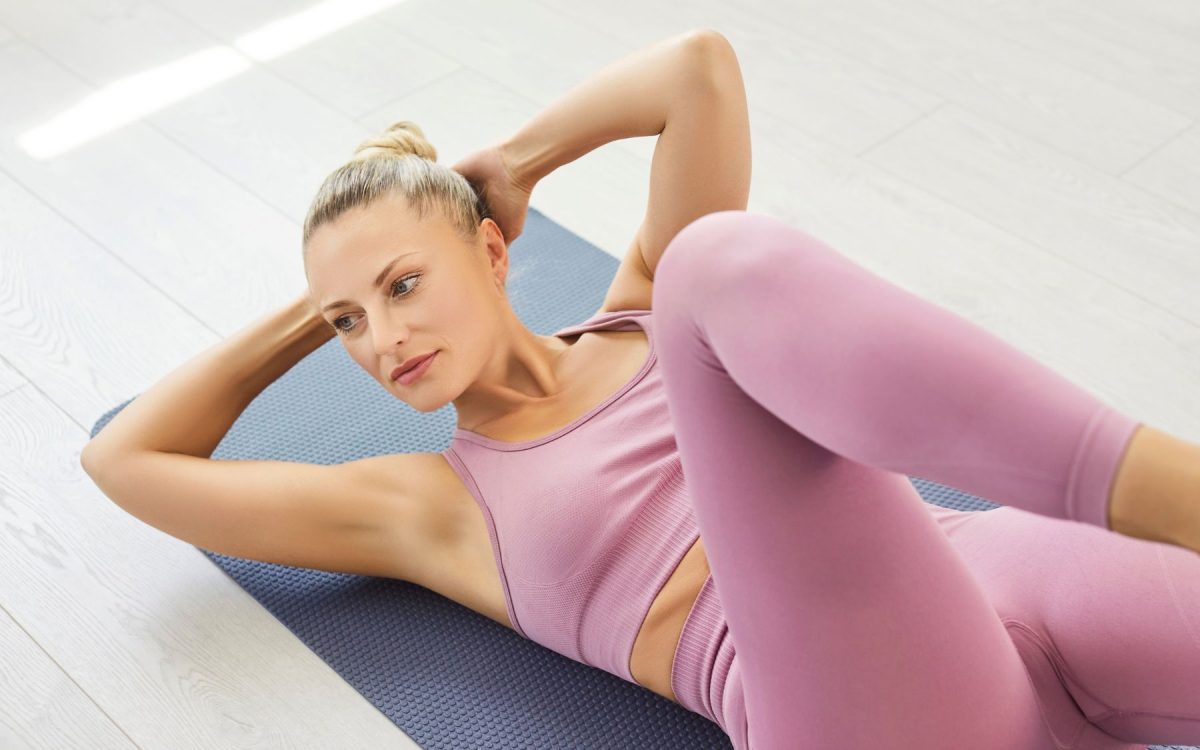
Fit, Active… But What About Your Cholesterol?

If you exercise regularly, chances are you feel like you’re doing a pretty good job of looking after your health – and so you should! Maybe you strength train a couple of times a week, get your steps in, try to eat well and generally keep yourself moving. When you’re doing all of that, it’s easy to assume that your heart health will naturally reflect your healthy lifestyle. 

When was the last time you thought about your cholesterol? Cholesterol isn’t something we always associate with being fit and active. We often think of high cholesterol as something that only affects people who don’t exercise or who have an unhealthy diet. It’s not quite that simple. Being fit and active is great for your heart, but it doesn’t automatically mean your cholesterol levels are where they should be. Diet and exercise matter, but other factors – including our genetics – can play a part too.

October is National Cholesterol Month and HEART UK has launched their campaign “Swap the Scroll for a Stroll!” The idea is simple: swap some of the time we spend sitting and scrolling for walking and movement. HEART UK is encouraging people to take on a walking challenge during October, with the option to walk 50, 100 or 150 miles over the month. It’s also a great reminder for a heart-health check in.

So, let’s have a look at cholesterol, why it matters and some of the simple swaps we can make to look after our hearts and our health.

What is cholesterol?

Cholesterol is a waxy, fatty substance that our bodies use to build cells and make certain hormones and vitamin D. According to Harvard Health Publishing, the liver generates approximately 80% of the cholesterol your body needs to function and the remaining 20% comes from the foods we eat.

An interesting fact that many of us don’t know is that while cholesterol is typically thought of negatively, our bodies actually need a healthy amount of it too.

Your body uses cholesterol to:

  • Build and maintain cell membranes, which surround every cell.
  • Make important hormones, including cortisol, estrogen, progesterone and testosterone.
  • Produce vitamin D when your skin is exposed to sunlight.
  • Make bile acids, which help you digest and absorb fats.

The problem is not cholesterol itself. It’s having too much of certain types of cholesterol in the blood, which can contribute to fatty deposits building up inside the arteries. Over time, this can increase the risk of cardiovascular disease, including heart attacks and strokes. 

Good & Bad Cholesterol 

You’ve probably heard cholesterol described as “good” or “bad”. Cholesterol needs to travel around the body in the blood, so it’s carried by particles called lipoproteins. Two you’ll often hear about are LDL and HDL.

  • LDL is commonly referred to as “bad cholesterol”. We need some LDL, but higher levels mean more cholesterol is circulating in the blood, where it can contribute to fatty deposits building up in the walls of the arteries over time.
  • HDL is often called “good cholesterol”. It helps transport cholesterol away from tissues and back to the liver, where it can be processed and removed / recycled.

You might also come across the term non-HDL cholesterol. This includes the cholesterol carried by LDL and other particles that can contribute to fatty build-up in the arteries, so it can be useful when looking at cardiovascular risk.

Did you know…

We can sometimes assume that because we exercise, eat reasonably well and feel healthy, our cholesterol must be fine. Unfortunately, it doesn’t work quite like that. There are lots of factors that influence cholesterol. Diet and physical activity are certainly part of the picture, but genetics can play a significant role too. Some of us inherit conditions such as familial hypercholesterolaemia, which can cause very high cholesterol from a young age. Your genes can play a part in your cholesterol levels. But here’s something you might not realise – you can have high cholesterol and feel absolutely fine.

Fit? ✓
Strong? ✓
Active? ✓
High cholesterol? Possibly.

You might run, cycle, walk, hit the gym and generally feel great – but that doesn’t necessarily mean your cholesterol is in a healthy range. High cholesterol usually doesn’t come with obvious symptoms. That’s why it’s often called a “silent” risk factor. You can’t see it or feel it and you can’t tell what your cholesterol level is just by looking in the mirror. The only way to really know? Get it checked! You can read more about cholesterol levels here via the NHS too.

What should I be eating?

Rather than thinking about cholesterol as another long list of things you can’t eat or things you should be doing, think about the positive changes you can make. The NHS recommends reducing foods high in saturated fat and replacing some saturated fats with unsaturated fats. Foods such as oily fish, nuts, seeds, wholegrains, fruit and vegetables can all form part of a healthy diet. 

For example, when it comes to food, you could consider swaps such as:

  • Butter – olive or rapeseed oil
  • Processed meats – fish, beans, lentils or leaner cuts of meat
  • Some high-saturated-fat snacks – fruit, nuts or seeds
  • Refined grains – wholegrain versions
  • Creamy sauces – tomato or vegetable-based sauces
  • Full-fat dairy products – lower-fat alternatives where appropriate

The aim isn’t to remove every food you enjoy from your diet. It’s about looking at your overall eating pattern and finding realistic ways to reduce saturated fat while including more foods that support a heart-healthy diet.

I eat a plant-based diet – can I still have high cholesterol?

Yes, you can. Eating a plant-based diet can be great for your heart, particularly when it’s rich in vegetables, fruit, wholegrains, beans, lentils, nuts and seeds. But being plant-based doesn’t automatically mean your cholesterol will be in a healthy range. While plant foods themselves don’t contain cholesterol, some can be high in saturated fat, which can raise “bad” cholesterol.

Coconut and palm oils are particularly high in saturated fat and can crop up in foods such as vegan cheese, plant-based butter, coconut milk, coconut yoghurt, desserts and some meat alternatives. So something being labelled “vegan” or “plant-based” doesn’t necessarily mean it’s heart-healthy. A well-planned plant-based diet can be very heart-friendly. Focus on plenty of whole plant foods and fibre and choose sources of unsaturated fats such as nuts, seeds, avocado and olive or rapeseed oil more often.

Your movement matters!

This is where the HEART UK campaign caught my attention. We know that being physically active is important for cardiovascular health, and regular activity can also help with some of the factors that influence your cholesterol and overall cardiovascular risk.

Strength training is an important part of maintaining muscle and physical function as we get older, and the NHS recommends muscle-strengthening activity on at least two days a week. NHS – Physical activity guidelines for adults

Could you walk during a phone call? Could you get outside at lunchtime? Could you take the stairs? Could you walk to the shops rather than drive? Could you go for a walk after dinner instead of immediately sitting down with your phone? These things might seem insignificant compared with a workout, but they are all ways of making your day more active.

Small swaps to think about:

So, what could you actually change this month? Have a look at your normal routine and see where you could make a few simple swaps:

  • Swap 20 minutes of evening scrolling for a walk.
  • Swap a short car journey for walking when practical.
  • Swap sitting through a phone call for walking around.
  • Swap butter for olive oil, swap some processed meat for fish, beans or lentils.
  • Swap some refined carbohydrates (white bread, white rice, many breakfast cereals and foods made with white flour) for wholegrain alternatives.
  • Swap an episode of your favourite tv show for an early night (sufficient rest is always important).
  • Swap “I’ll get my cholesterol checked one day” for actually finding out when you’re due a check (or book it in regardless!).

A Final Thought

Your cholesterol levels are just one part of the bigger picture when it comes to your heart health, alongside factors such as your age, blood pressure, lifestyle, family history and other health conditions. It’s about doing the things that make a difference consistently – moving your body, eating well most of the time, getting enough sleep and paying attention to the things you can’t necessarily see or feel.

If you’re already active, keep going! Every walk, workout and bit of movement counts. But don’t let feeling fit and healthy give you a false sense of reassurance about your cholesterol. High cholesterol can affect active people too and factors such as genetics and family history aren’t something you can out-train. So perhaps National Cholesterol Month is a good opportunity to do two things: move a little more and learn about your cholesterol. Swap the scroll for a stroll. Make a few heart-healthy swaps where you can. And, if you don’t know your cholesterol levels, consider getting them checked.

As always, any questions please do get in touch. 

Caroline x

Why Your Brain Loves an Active Lifestyle

When you exercise, you’re not just exercising your muscles. Did you know your brain is involved in almost everything you do when you exercise? From balancing and coordinating your movements to learning a new exercise, controlling your breathing and deciding how much effort to put in, your brain and body are in constant communication.

Research into exercise and brain health has grown considerably over the last few years and while there is still plenty we don’t know, evidence increasingly supports physical activity as an important part of healthy ageing and maintaining cognitive health.

So, why does your brain love an active lifestyle?

Exercise supports healthy blood flow to your brain

Let’s start with something fundamental: your brain needs a constant supply of oxygen and nutrients, and healthy blood vessels are essential for delivering them. We often associate better circulation and cardiovascular health with activities like running, cycling or swimming, but strength straining specifically plays an important part.

When you lift weights, your muscles need more oxygen and nutrients to meet the demands of the exercise. Your heart rate increases, blood flow rises and your cardiovascular system has to work alongside your muscles to support that effort. The benefits aren’t limited to what happens during your workout. Regular strength training can contribute to better cardiovascular health over time, including improvements in blood pressure and blood vessel function. These are important because the health of your heart and blood vessels is closely connected to the health of your brain.

While lifting weights is usually associated with building stronger muscles and bones, by supporting your cardiovascular and metabolic health, strength training can also contribute to the wider picture of keeping your brain healthy as you age.

Your brain likes variety and challenge

One of the reasons I was first drawn to strength training is that it doesn’t just involve your muscles – it involves learning too. Think about learning a language, an instrument or a new hobby. At first, you have to concentrate, but with practice it becomes more familiar.

Exercise can work in a similar way. When you learn a new movement, your brain is busy:

  • working out where your body is and how it needs to move
  • coordinating your muscles
  • helping you balance and maintain your posture
  • controlling the movement
  • adapting as you practise or try different variations

That’s one of the reasons we include variety in Caroline’s Circuits. Familiar exercises help you build confidence, while different movements and variations give your brain and body new challenges to work through.

This becomes particularly valuable as we get older. Strength training gives us regular opportunities to practise balance, coordination, body awareness and movement control – all things we rely on in everyday life.

What is your brain doing during different exercises?

Changing your stance, moving your weight, balancing on one leg or lifting a weight overhead all require slightly different combinations of balance, coordination and body awareness. Here’s a look at what your brain is doing behind the scenes as you move.

  • Squats: Your brain is coordinating your hips, knees, ankles and core while helping you balance, control your posture and keep track of your body position as you move up and down.
  • Lunges: Your feet are in different positions and each leg has a different job, so your brain has to manage balance, coordination and body position in a different way.
  • Single-leg deadlifts: Take away the support of one leg and there’s an even greater balance challenge. Your brain uses proprioception (awareness of where your body is in space) and makes constant small adjustments to help keep you stable.
  • Step-ups: Your brain has to judge the height and position of the step, coordinate where you place your foot, shift your weight onto one leg and maintain your balance as you move up and down.
  • Overhead presses: Here, your brain is coordinating your shoulders and arms while also organising your core and other stabilising muscles to keep the rest of your body controlled as the weight travels overhead.
  • Rows: Your brain coordinates your arms, shoulders and back to pull the weight toward your body while keeping your torso stable and controlling the movement.
  • Farmer’s carries: There’s a lot to coordinate. Your brain is managing your walking pattern while you grip the weights, maintain your posture, stabilise your core and respond to small changes in balance with every step.

The exercise may change, but the principle is the same: your muscles are doing the work, while your brain is constantly coordinating how that work gets done.

Your brain benefits from the bigger picture too

Looking after your brain isn’t just about what happens during your workout. An active lifestyle often brings other habits with it that support both physical and brain health. Exercise can influence chemicals involved in mood and wellbeing, help us manage stress and support better sleep. Eating a varied, balanced diet provides the nutrients and energy our brain and body need, while staying socially connected, getting outdoors and making time to recover all contribute to the bigger picture. There isn’t one exercise, food or habit that keeps your brain healthy – it’s the combination of regular movement, good nutrition, sleep, stress management and staying engaged with life that matters.

What does this mean for Alzheimer’s and dementia?

Whenever we talk about brain health, Alzheimer’s disease and dementia are naturally part of the wider conversation. While this can be a sensitive topic, what we do know is that physical activity is one of several modifiable lifestyle factors associated with dementia risk.

Exercise can support brain health in several ways – increasing blood flow to the brain, reducing inflammation and supporting healthy brain cells. Together, these effects may help protect memory and cognitive function, while combining cardio and strength training provides a broader range of benefits for brain health, mobility and everyday tasks.

Regular physical activity forms part of wider recommendations for supporting brain health as we age. Exercise can also provide important physical and functional benefits for people already living with dementia, when it is appropriate for their individual abilities and circumstances.

  • We can move.
  • We can build strength.
  • We can look after our heart.
  • We can challenge ourselves.
  • We can keep learning.
  • And we can make movement something we enjoy as we age!

Read more about physical exercise and Alzheimer’s here.

A Final Thought

We often think about exercise in terms of what we can see – stronger muscles, better balance or being able to do more. But it’s so much more than that! Every time you move, practise a skill, challenge yourself or learn something new, your brain is part of that experience too.

We can’t control every aspect of ageing, and there are no guarantees when it comes to our health. But we can keep giving our bodies and brains reasons to stay active, engaged and challenged.

As always, any questions please do get in touch. 

Caroline x

It’s Not What You’re Eating, It’s Why

Written by Laura Clark

By the time we reach midlife, no doubt we have a few stories we tell ourselves. If Caroline and I had been at school together I reckon I would have been terrified of her on the netball court. 

As, whilst surviving all that the 90s threw at us, I was also totally hapless at catching any balls – I lacked skill, coordination and basically any form of physical prowess.

Stories I told myself at school, have shaped my relationship with physical activity my whole life. Thankfully, through kind and compassionate coaches like Caroline, we’re given an opportunity to find our way with training in the least intimidating way. 

We meet our glutes, have a conversation with them, and realise they’ve literally held us up all these years. It’s now time to strengthen them, and release their power, but on our own terms.

The stories we tell ourselves tend to shape our habits around food and exercise, and in a professional capacity as a dietitian and food therapist, I’m keen to explore the food bit.  Often there’s something about eating that doesn’t feel as straight forward as following a training plan.

Our relationship with food is a complex blend of our biology, psychology and environments. What starts as a simple conversation – ‘Hey Laura, I’m so confused about food, please tell me what to eat’, becomes a curious journey to discovering connections between our thoughts and our habits that we never knew existed.

The trouble with the science of nutrition, is that there’s nuance (people and food are hard to study) and we are all unique in how we interact and process the food we eat. 

When it comes to diet advice, we might be drawn to all-or-nothing approaches and food rules that sound compelling and, on the surface, straightforward to follow. Add to that the stories we’ve told ourselves for decades about not being able to trust our own choices, and it’s easy to see why outsourcing decisions to an app or someone else’s plan feels like the simpler option.

The trouble is it tends to box us in. We disconnect from the part of us that’s flexible and compassionate, and lean instead on the “harsh lady with the clipboard” — all rules, all standards, endlessly demanding more motivation. When willpower inevitably runs low, in comes the part wanting to rescue us, sometimes via the “what the hell effect,” sometimes just by letting us zone out for a bit. Pendulum between the two often enough, and recovery takes longer each time.

In Fit at 50, Caroline and I were passionate about eating and training as two separate, supportive pillars – neither competing with the other. Food doesn’t have to be burnt or earnt, and uncoupling “diet and exercise” tends to improve our relationship with both.

So, if we want our food to feel as empowering as those glute bridges, it might be time to change the story.

Here’s where I’d start:

Habits are information – because anything repeated must in some way be solving a problem. The things we judge ourselves for are very often trying to tell us something.

Take the classic 6pm kitchen scenario – walking in and immediately picking at food. It’s easy to decide that’s a willpower problem and ban snacks from the house. Or we could get curious instead. What did lunch look like? How long ago was that? Is this the first quiet moment of the day? Is food offering a transition between work and home – comfort, decompression, five minutes that belong to no one else?

Suddenly we see a behaviour that makes complete sense. 

It’s also worth noticing what’s already going well – maybe you’re already great at getting protein in at breakfast, or vegetables always show up at dinner, or you’ve made peace with a biscuit, and it genuinely doesn’t throw you off course. Midlife is a great moment to take stock of our health with fresh curiosity – not because anything’s broken, but because it’s a natural point to notice what’s working, and where a little more support could help us feel even better.

Getting curious is key…

Next time you catch yourself thinking ‘why can’t I just eat better in the evenings’ – try resisting the urge to finish that sentence with a judgement. Stay with the why instead. What’s getting in the way? What need might this be meeting? Am I under-fuelled, overwhelmed, tired, bored, or just genuinely hungry?

There’s no correct answer. It’s simply about reconnecting with what’s happening underneath the habit, rather than immediately overriding it with a rule.

Just as good training doesn’t need to be complicated, neither does eating well. You don’t need to count calories or follow a plan to get ‘it’ right – just a rough checklist:

  • Protein at every meal – supports muscle, keeps you fuller for longer, and matters more in midlife than ever
  • Fibre from plants – vegetables, fruit, wholegrains, pulses – aim for colour and variety rather than perfection
  • Carbohydrates, unapologetically – your brain and energy levels need them, and they allow protein to do the ‘building’, rather than having to be used as a fuel. 
  • Regular meals – skipping earlier in the day is often exactly what sets up that 6pm kitchen scenario in the first place
  • Something satisfying – food you actually enjoy is key; satisfaction isn’t a bonus; it’s part of what makes eating well sustainable

Tick those boxes more often than not, and you’re doing the fundamentals well – no app, no plan, no rules required.

If you’d like support to create a more nourishing relationship with food, I can help you with that here.

If this blog has made you think, you might like my weekly newsletter – join my email community here.

Laura x

How Heavy Should I Be Lifting?

One of the most common asked questions I get is: ‘What weights should I be lifting?’ There is not one size fits all here and there is not one simple answer. The right weight for you will depend on several factors, including the exercise programme you’re doing, the number of repetitions you’re completing, your experience with strength training and what you’re hoping to achieve as your final goal. There isn’t one particular weight that everyone needs to lift to get stronger. BUT there is progressive overload, challenging your muscles so that you continue to build strength. Read on!

This is an important point to understand, particularly as we hear more about the benefits of strength training as we get older. While progressively challenging your muscles is an important part of building strength, that doesn’t necessarily mean you always need to lift heavy weights. Lighter weights can still be effective, particularly when used with the right number of repetitions and performed with good technique. The key is choosing a weight that provides an appropriate level of challenge for your current ability and gradually increasing that challenge as you become stronger.

What Weights Do I Need?

Start with what you have. If you’re training at home, you may not have a whole collection of dumbbells. Squats, lunges, rows, presses, curls and many other exercises can all be performed at home and you can do a huge amount with a small selection of equipment. If you’re new to resistance training, I’d much rather you start with something that feels manageable and learn how to perform the exercises properly before thinking about how heavy you can lift.

There’s already plenty to think about when you’re learning a new movement. Your posture, positioning, range of movement and breathing. Getting those basics right gives you something to build on. On my platform I always suggest starting with 2kg (or bodyweight) and building up from there – different muscles have different levels of strength, so your weights can vary throughout your workout.

How should the weight feel?

Rather than getting too caught up in the number written on the dumbbell, think about how the exercise feels. As you work through a set, the repetitions should become more challenging, but you should still be able to maintain good control and technique. I always say that all movements should feel challenging but never painful.

If you finish and feel like you could easily have done another ten repetitions, you’re likely ready for more resistance. On the other hand, if you’re struggling to control the weight, swinging the dumbbells around or changing your technique because they’re too heavy, it’s probably time to reduce it.

A useful rule of thumb is that your weight should:

  • challenge your muscles
  • become harder towards the end of the set
  • allow you to maintain good technique
  • feel appropriate for the exercise you’re doing

A heavier dumbbell doesn’t automatically mean a better workout – I would always choose good technique with a lighter weight over poor technique with a heavier one. Remember too that adding extra reps, more time under tension and a longer workout in general are also all going to add to the fatigue. Even just using bodyweight or a resistance band can add to the stimulus for the muscle. 

Why lifting heavier matters

Our muscles become stronger when we regularly ask them to work against resistance. As you get stronger, a weight that once felt challenging will eventually become easier. Increasing the weight allows you to continue giving your muscles enough resistance to keep building and maintaining strength. Essential in midlife to stay stronger as we age.

This is known as progressive overload – gradually increasing the weight as your strength improves. It might mean moving from 2kg to 3kg dumbbells, or from 5kg to 6kg. The numbers themselves aren’t important, what does matter is that you’re gradually increasing the resistance from where you started. If you continue using a weight that has become easy, you’re no longer giving your muscles the same level of challenge. Increasing the weight when you’re ready helps you continue to progress as your strength develops.

On my platform, in our Monday full body power class, we tend to lift heavier especially when we are focusing on the larger muscle groups such as the legs, the chest, the back. Similarly our Wednesday classes are specifically targeted at the glutes, another large powerhouse of a muscle so we tend to work with slightly heavier weights or time under tension with a band. The glutes and other larger muscles of the lower body can generally handle more resistance than the arms, so using a heavier weight allows us to work them at an appropriate level for their strength.

The key is not to lift as heavy as possible, but to gradually increase the weight as your body becomes stronger.

Why do we continue to lift with lighter weights?

A common misconception is that when we start progressing, we no longer need our lighter weights. This isn’t correct, after years of strength training I still incorporate lighter weights in my workouts and throughout my weekly classes. Lighter weights can be particularly useful when we’re working on muscular endurance, your muscles’ ability to keep working repeatedly or for longer periods. I love my small weights for an arms finisher for example!

Don’t underestimate the lighter weights! A pair of light dumbbells might feel very manageable when you first pick them up, but after several minutes of repeated movements, you’ll feel differently, trust me. And again you can also make lighter weights more challenging without buying anything new. Try increasing your repetitions, adding another round, reducing your rest time or slowing the movement down.

When should I go heavier?

You don’t need to automatically buy heavier dumbbells every few months. But there will come a point when the weights you have simply aren’t challenging you enough for certain exercises. If you’re consistently completing your repetitions with good form and finishing a set feeling like you could comfortably do considerably more, that’s a good time to think about progressing.

If you feel comfortable lifting with your 2kgs, a pair of 4kgs could be a good next step. If you’re comfortable lifting 5kgs, a 7kg pair could be your next to purchase – do still keep hold of your lighter weights. You don’t have to increase everything at once. You might be ready for heavier weights for squats and lunges but still use lighter dumbbells for shoulder exercises. In an ideal world you would have two sets, one heavier set for legs for example and one lighter set for upper body. However I do appreciate that dumbbells are now very costly so make them work for you.

It’s also important not to compare your weights with someone else’s. Social media makes this particularly difficult because it’s easy to see somebody lifting a huge pair of dumbbells and feel that you should be doing the same. Remember, you don’t know how long they’ve been training, where they started or whether that weight would be appropriate for you. It’s important to look at your own progress – if you started with 2kg and you’re now comfortably using 4kg, that’s progress. If you can do more repetitions or move with better control, that’s progress too.

You don’t have to lift heavy every workout

If you’re nervous about lifting heavier, there’s no need to rush. Build your confidence, get comfortable with the exercises and gradually introduce more resistance when you feel ready. Small increases can add up to significant improvements over time.

Some days you’ll feel strong and energetic. Other days you might be tired, have slept badly or simply have less energy. Remember you can adjust your workout accordingly. Using heavier weights when you feel good and lighter ones when you need to take things a little easier is perfectly sensible. Being able to adapt your training isn’t a sign that you’re not working hard enough. It’s part of learning how to train consistently and sensibly.

A final thought

I think the most important thing is not to get too caught up in the number written on the side of your dumbbell. It’s very easy to think that getting stronger means lifting more than someone else, but strength isn’t a competition. The person you really need to compare yourself with is the person you were when you started. Maybe you’re now using weights that would have felt impossible a year ago. Maybe you can do more repetitions, move with better control or complete a workout that once felt incredibly difficult. These are all signs that you’re getting stronger!

As always, any questions please do get in touch. 

Caroline x
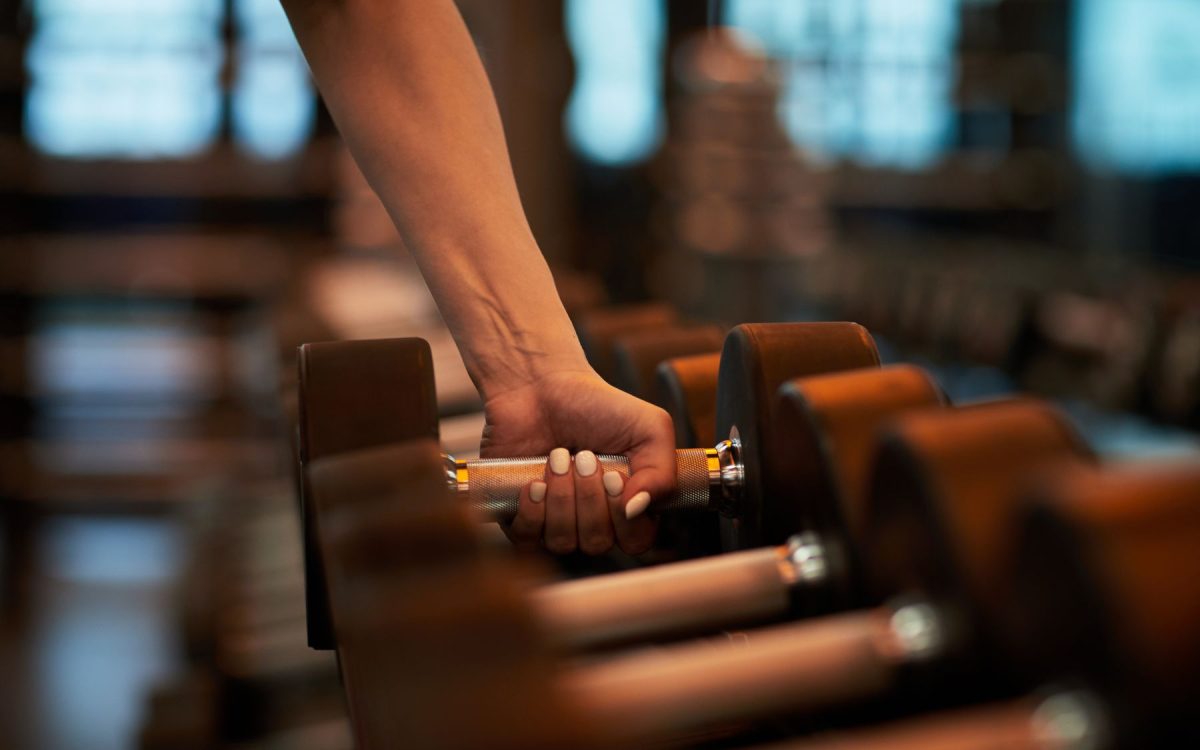
Your September Strength Reset

We’re constantly bombarded with different health and fitness trends, so it can be hard to know where to start or how to feel motivated. Part of my fitness philosophy is to strip things back to basics, with minimal equipment – foundational exercises are at the heart of my online weekly fitness platform. Exercise should be fun and exciting, something you look forward to and a little time that’s just for you.

When you’re starting something new, it’s tempting to focus immediately on results. How quickly can I get stronger? How much weight can I lose? But the key is to build the habit first. The more regularly you do something, in a familiar environment and at a regular time, the easier it becomes to keep going. That’s why I love a four-week reset. It gives you enough time to find your rhythm, build consistency and start noticing changes in your body. By the end of the four weeks, you’ll have built strength, established a routine and created enough momentum to move into the next month feeling eager to keep going. 

What can four weeks of consistent training do?

Whether you’re picking up strength training for the first time or you’ve been at it for a while, four weeks of consistent, focused training is enough to feel a real shift. When you train regularly, your muscles and nervous system get better at working together. If you’re new to strength training, this often shows up as things clicking into place – exercises feeling more familiar, your form settling and you naturally reaching for a bit more weight or an extra rep. If you’re already training, that same process shows up as your lifts feeling smoother and your technique getting sharper, even on movements you know well.

It’s also a great time to check in with how you’re doing each exercise and if you’re training your muscles properly. This matters more than ever in midlife, when maintaining and building muscle becomes a real priority for strength, metabolism and long-term mobility. Four weeks is where that process gets underway.

WEEK 1: TECHNIQUE

This week is about getting used to the exercises and your body moving in general. You don’t need to lift heavy weights. I suggest to many of my beginners to start with 2kg or bodyweight only. If you’ve trained with me before, use this week to reconnect with your technique. Could you slow your repetitions down? Could you improve your range of movement? Could you increase the weight on an exercise that has become comfortable?

Example Workout – Full Body

Complete 2 rounds, resting 60-90 seconds between exercises

  • Bodyweight Squat – 10 reps
  • Wall or Knee Press-Up – 8 reps
  • Glute Bridge – 12 reps
  • Dorsal Raise – 10 reps 
  • Dead Bug – 8 reps per side
  • Standing Marches – 30 seconds

Meghan CCMeghan_CCEdit Profile

Your checklist: 

  • Complete 2 strength sessions 
  • Leave at least a day between sessions where possible, practice mobility each day (see here for a 10 minute mobility sequence) 
  • Focus on learning the movements 
  • Choose a weight that allows you to maintain good form (start with 2kg or bodyweight only) 
  • Notice how your body feels during the workout – you could keep a journal throughout the four weeks to see how you have progressed 
  • Put your next week’s sessions in your diary to help keep yourself accountable and something to look forward to!

WEEK 2: BUILD

This week, start paying attention to when exercise actually fits into your life. There isn’t a “right time” to train. I love getting my workouts done in the morning (aside from my live Tuesday class at 2pm BST). It might be that your only time is during the day, or after work. The key here is to set a time that works for you and keep consistent with it week after week so your body knows what to expect. If you’re unable to complete a workout, a shorter session still counts and fifteen focused minutes beats a workout you keep putting off. This is exactly why I keep classes varied and accessible, so you can shape your week around what actually works for you.

Keep the exercises from week one similar. The more you repeat a movement, the more your body learns it and gets stronger doing it.

Example workout – Full Body

Complete 2–3 rounds, resting 45–60 seconds between exercises.

  • Goblet Squat – 10–12 reps
  • Reverse Lunge – 8 reps per side
  • Shoulder Press – 10 reps
  • Bent-Over Row – 10 reps
  • Plank – 20–30 seconds
  • Standing Marches – 30 seconds

Your checklist: 

  • Complete 2–3 strength sessions
  • Focus on controlled repetitions
  • Practise the same fundamental movements
  • Keep an eye on your form as you fatigue
  • Add walking or everyday movement around your training
  • Put your next week’s sessions in your diary to help keep yourself accountable and something to look forward to!

WEEK 3: PROGRESSION

Once you’re comfortable with the movements, your body needs a reason to keep adapting, this is where progressive overload comes in. Progress doesn’t necessarily mean lifting huge weights – it might look like increasing your weight, completing more repetitions, improving your range of movement or even just feeling more confident with a movement.

If you’ve been using the same weights for months and every set feels easy, it may be time to challenge yourself. The final few repetitions of a set should feel challenging but you should maintain good form.

Example workout – Full Body 

Complete 3 rounds, resting 45 seconds between exercises

  • Goblet Squat – 12 reps (increase weight if the last few reps of Week 2 felt easy)
  • Static Split Squat – 8 reps per side
  • Romanian Deadlift – 10 reps
  • Chest Press – 10 reps
  • Dorsal Raise – 10 reps 
  • Bird Dog – 8 reps per side (slow the tempo down)

Your checklist:

  • Complete 2–3 strength sessions
  • Choose one or two exercises to progress – can you increase the weight or add more reps?
  • Keep your repetitions controlled
  • Pay attention to your technique and notice which movements are becoming easier
  • Put your next week’s sessions in your diary to help keep yourself accountable and something to look forward to!

WEEK 4: CONSISTENCY

By the fourth week, you may notice physical changes and confidence around exercise. You know what a strength session feels like, you’re more familiar with the movements, and you know which weights work for you. You’re beginning to understand when to push yourself and when to modify. This is a time where you will clearly see that consistency will bring you results.

Example workout – Full Body

Complete 3 rounds, resting 30-45 seconds between exercises

  • Goblet Squat – 12–15 reps
  • Step-Up – 10 reps per side
  • Single-Leg Hinge – 8 reps per side
  • Shoulder Press – 12 reps
  • Bent-Over Row – 10 reps
  • Standing Marches – 30 seconds
  • Plank – 30–40 seconds

Your checklist: 

  • Complete 3-4 strength sessions
  • Look back at the weights you used in Week 1 and identify where you’ve become stronger
  • Challenge yourself where you feel ready
  • Remember to include your daily steps/cardio
  • Continue to prioritise good form 
  • Take modifications when you need them
  • Decide what Week 5 looks like for you – put it in the diary
  • Celebrate four weeks of consistency!

A Final Thought

Four weeks doesn’t sound like long, but it’s amazing what happens when you commit to showing up. It’s enough to take you from “I really should start working out” to someone who trains three or four times a week, without even noticing the shift happen. If you’re already exercising, use these four weeks differently – dial in your form, add a bit more challenge, and pay attention to how your body and mind adapt along the way. However you use it, this is your chance to set yourself up before the last quarter of the year rolls in (can’t quite believe I’m saying that already!).

As always, if you have any questions please do get in touch.

Caroline x