12 Days of Fitness: A Festive Challenge

Stay Strong, Energised & Consistent This December – with Just 10 Minutes a Day

December is magical… and chaotic. Parties, shopping, school events, travel, end-of-year deadlines – your schedule fills up fast, and your workout routine is often the first thing to slip.

But here’s the good news: you don’t need an hour, a gym, or even a perfect routine to stay fit and energised through the holidays. What you do need is consistency – and that’s where my 10-minute workouts shine.

Introducing my 12 Days of Fitness Festive Challenge: A simple, doable, mood-boosting set of workouts designed for those who wish to stay strong, mobile, and motivated during the busiest month of the year. Each day features one powerful 10-minute session. That’s it. Short. Sharp. Effective.

Why 10 minutes works

A lot can happen in 10 minutes:

  • Your heart rate lifts
  • Major muscle groups activate
  • Metabolism gets a push
  • Mood and energy rise
  • You stay connected to your fitness routine without overwhelm

Short workouts are also easier to stick with when life is full on. By keeping the bar low but the effort high, you end December feeling accomplished, not burnt out.

The 12 Days of Fitness Challenge

Each session is just 10 minutes. Just a set of dumbbells (or water bottles if you’re away) needed – perfect for holidays, travel, and days when time is tight.

For each workout follow this set up:

  • Do each exercise for 40 seconds
  • Rest for 20 seconds 

Day 1: 10-Minute Full Body 

High-energy bodyweight moves to warm up your fitness month. Repeat twice.

  • High knees or standing marches
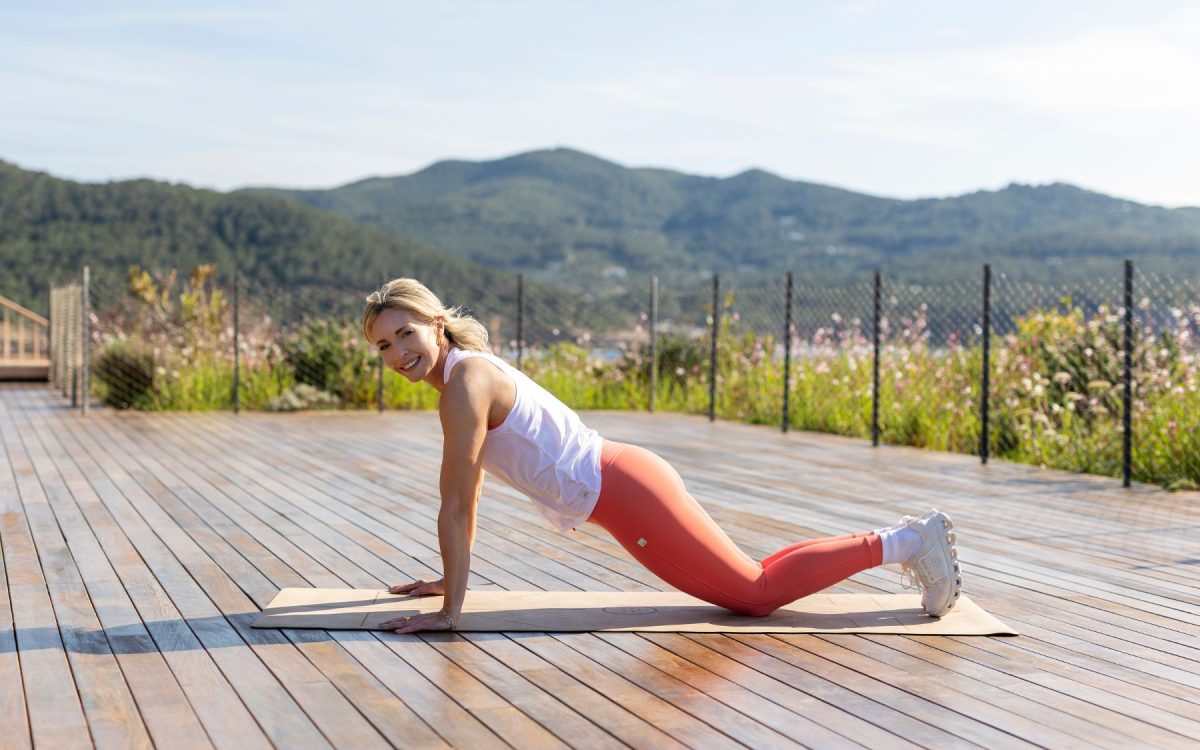
  • Press ups (knees or toes)
  • Walking lunges
  • Mountain climbers 
  • Crunches

Day 2: 10-Minute Lower Body Power

Glutes, hamstrings, quads & calves – a quick burner to build leg strength. Repeat twice.

  • Squats
  • Static lunges (20 seconds each side)
  • Glute bridges
  • Deadlifts
  • Calf raises

Day 3: 10-Minute Arms + Abs

A short sharp session to sculpt and strengthen your upper body. Repeat twice.

  • Shoulder press
  • Chest press
  • Bent over row
  • Dead bugs
  • Plank

Day 4: 10-Minute Cardio Burst

Sweaty, fun, and fast. Think low-impact options with high rewards. Repeat twice.

  • Squat (or squat jump)
  • Alternating lunge (or lunge jump)
  • Mountain climber
  • Crab walks (or shuttle runs)
  • Walk outs

Day 5: 10-Minute Core 

Focused abdominal work to stabilise and support your whole body.

I’ve included a video for this workout here for you to follow along. Once only.

  • Dead bugs
  • Toe taps
  • Slow bicycles
  • Low plank with knee tap
  • Supported flutters
  • Tap unders
  • Reverse ab curls
  • Rope climbers
  • Angel feet
  • Hollow hold

Day 6: 10-Minute Mobility Flow

Stretch, loosen, and release tension—especially helpful in December! (would recommend the new yoga classes on the platform here if you have time too). Repeat twice.

  • Downward dog
  • Shoulder rolls 
  • Forward lunges with rotation
  • Arm circles 
  • Bird dogs

Day 7: 10-Minute Glute Activation

Mini circuit to challenge and fire up the glutes. Repeat twice.

  • Side leg lifts (20 seconds each side)
  • Single leg glute bridge (20 seconds each side)
  • Fire hydrants (20 seconds each side)
  • Donkey kicks (20 seconds each side)
  • Clam legs (20 seconds each side)

Day 8: 10-Minute Strength Stack

A mix of functional movements to build strength efficiently. Repeat twice.

  • Lunge and bicep curl
  • Squat and press
  • Deadlift and bent over row
  • Around the world
  • Press up

Day 9: 10-Minute HIIT Express

Short intervals with maximum impact. All body weight. Repeat twice.

  • Crab walks / shuttle runs
  • Squat and reach
  • Lateral lunges
  • Sumo squats 
  • Jacks or bum kicks

Day 10: 10-Minute Arms & Shoulders

Targeted upper-body burn. Repeat twice.

  • Bicep curl
  • Tricep extension
  • Arnold press
  • Reverse flye
  • Lateral raise

Day 11: 10-Minute Core + Cardio Combo

A powerful duo to elevate your heart rate and tighten your midsection. Repeat twice.

  • Slow mountain climber
  • Commando
  • Marches
  • Plank dips
  • Crunch tuck

Day 12: 10-Minute Festive Full Body Finish

A celebratory final session to leave you glowing and strong. Repeat twice.

  • Shoulder press 
  • Wide to narrow squat
  • Walking lunge
  • Bent over row
  • Bicycles

How to Make This Challenge Work for You

  • Do your workout anytime: morning energy boost, mid-day break, or before bed.
  • Double up on days you feel energised – but one workout is always enough.
  • Keep your expectations realistic: consistency beats intensity in December.
  • Track your progress – a simple tick on your calendar is so motivating
  • Celebrate the small wins: showing up is the win!

The Gift You Give Yourself

The holidays can drain your energy, or they can elevate it – you get to choose. With just 10 minutes a day, you stay strong, grounded, and connected to your body while still having time for everything (and everyone) else.

This December, let’s redefine what it means to stay fit: Simple. Sustainable. Powerful.

Join the 12 Days of Fitness and finish the year feeling proud, energised, and unstoppable.

If you have enjoyed these 10 minute workouts there are two full on-demand 10 minute series on the Caroline’s Circuits platform alongside the live classes and hundreds more on demand! 

As always, any questions, please do get in touch. Let me know if you try it!

Caroline x

Men’s Fitness – Is There Really a Difference to Women’s?

One common question I am asked is whether men and women can train together in the same way? Men and women are often told they need completely different routines – but do they really? While there are obviously biological differences between the two, when it comes to building strength, fitness, and long-term health, the gap is far smaller than you might think. In fact, the foundations of effective training – movement, consistency and recovery – are remarkably similar for everyone. So, is there really a difference between men’s and women’s fitness? Let’s take a closer look.

1. The biological baseline: what the research says

1. We know from research that it is harder for women to maintain muscle mass than men  – with the drop in oestrogen during perimenopause and menopause muscle builds more slowly in women and breaks down faster. Women may experience joint stiffness and longer recovery time and we know how bone density in women decreases from age 35+. In comparison men have 10–20× more testosterone, which directly drives muscle growth and repair as well as retention.

2. A consensus statement from the American College of Sports Medicine emphasises that adult males are typically faster, stronger and more powerful than females of similar age/training status – due to factors such as greater muscle mass, larger heart and lung volumes, higher testosterone.

3. One study found that, during short and maximal exercise, male students significantly out-performed female peers in strength and power tasks, partly because of lower fat-mass, higher lean mass.

4. On the flip-side, research suggests that when it comes to health outcomes (e.g., cardiovascular mortality), women derive more benefit per unit of exercise than men. For instance, a large study found women achieved similar benefits with ~ 2 and a half hours of moderate-vigorous activity per week, whereas men reached a plateau at ~5 hours. (see my previous blog for more on this here)

So what does this mean?
It means: yes – there is a baseline difference in anatomy and physiology. But it doesn’t mean women can’t do the same exercises, or that men must train in a completely different way. The gap often lies in how we train, how we recover and why we train.

2. Where the difference matters – and where it doesn’t

Let’s break this down into practical areas:

a) Strength, muscle mass & power

  • Men generally have more absolute muscle mass and stronger single-effort power output (due to bigger muscle cross-section, more type II fibres, higher testosterone) which gives them an edge in pure maximal lifts or sprints.
  • But, when strength or power is scaled relative to body size, or when looking at muscular endurance or functional movements, the difference shrinks. Many women make huge gains, lift heavy and improve strength dramatically.
  • Important point: Your starting point, training history and consistency matter far more than gender.

b) Endurance, cardiovascular and health outcomes

  • Surprisingly perhaps, women seem to get proportionally more health benefit for a given amount of movement in many large-scale studies.
  • That means: whether you’re male or female, moving more (and moving consistently) pays off – not just for performance but for longevity.
  • For endurance type efforts (cycling, swimming, running longer distances), the gender gap in elite performance is narrowing when considered relative to body mass and for events favouring fatigue resistance.

c) Recovery, hormones, and timing

  • Training stress, recovery needs and hormonal influences (e.g., menstrual cycle for women) are often cited as “gender differences”. But many recent studies suggest variability is less than we thought — for example, a study found women’s physical activity levels were less variable than men’s, and menstrual cycle-related variation in activity was minimal. 
  • What does matter for both sexes is recovery-sleep-nutrition: If you train hard, but don’t recover, the gains stall. I always emphasise that habit + consistency + recovery beat sporadic, short bursts of intensity.
  • Because of structural/hormonal differences though, training and recovery strategy might need a small tweak: for example prioritising mobility, joint health, and longer-term recovery as we age (especially for women in peri-menopausal years or men with declining testosterone).

d) Goals & outcomes

  • If your goal is “feel strong and live long”, the tactics for men and women overlap hugely: strength training + cardio + mobility + good nutrition + adequate rest.
  • If your goal is maximal bench press, Olympic lifting, sprinting, then yes – gender differences show more clearly (because the event is extreme). But for most of us in “real-life fitness” the difference is modest and often irrelevant.
  • I always focus on functional movement, full-body strength, mobility, longevity – all of which apply to men and women.

3. Practical training implications for men

As many of you have asked me specifically about men’s fitness, here are my practice-based suggestions with the “difference” in mind – for men wanting smart, sustainable fitness:

  1. Lean into strength training
    • Your physiology gives you a relative advantage in strength and power, so don’t shy from increasing your weights as your strength increases – progressive overload.
    • But remember: technique, joint control and recovery matter even more than how heavy you lift.
    • Work on both upper body (often neglected) and lower body (key for posture, knee/hip health, longevity).
  2. Always add functional, full-body movement
    • Don’t just train isolated “big lifts”. Incorporate body-weight circuits, mobility work, and movement patterns that translate to everyday life (bending, lifting, rotating).
    • Think strength that supports real life, not just gym metrics.
  3. Don’t overlook cardio and endurance
    • Even if your goal is strength, include at least 1-2 sessions of moderate cardio per week (brisk walk, cycle, row) to support heart health and fat metabolism.
    • The research shows that movement for longevity is as important as max strength.
  4. Prioritise recovery
    • Strength training breaks you down; recovery builds you up. Sleep, nutrition, hydration and mobility = non-negotiables.
    • Especially as men age: testosterone declines, recovery slows slightly – so adapt your volumes, include regenerative work and listen to your body.
  5. Focus on what you can control
    • Gender aside, your consistency, effort, rest and nutrition are your biggest levers.
    • Don’t get caught in “but women do X differently” or “men have to do Y” – focus on what works for you.

4. Practical training implications for women (and how that informs men too)

Although the focus of this blog was men’s health, a quick glance at women’s training mindset adds value (and men and women often train alongside each other, so it’s useful to understand):

  • Women may derive similar or greater health gains from lower volumes of exercise, so the pressure to “do more / bigger / heavier” may be less necessary – but still, the focus should be on progressive overload and continuing to challenge yourself.
  • Many women excel in endurance-type work, movement quality, mobility and recovery. Men can learn from that: less ego-lifting, more movement fidelity, more focus on joint health and longevity.
  • Hormonal fluctuations (menstrual cycle, menopause) may add complexity, but many of the fundamentals remain the same: strength + cardio + mobility + rest.

For men this means: adopt the consistency, quality, movement-focus and you’ll elevate your training.

5. My bottom line: Is there really a difference?

Yes – but not in the way many think.

  • The difference lies mostly in absolute strength, muscle mass and extreme performance metrics (which only matter for elite levels).
  • For general health, longevity, strength, mobility and functional fitness, the difference is small and won’t stop you from training, progressing and living stronger.
  • What matters far more: your programme quality, your consistency, your recovery, your nutrition. Gender is one piece of the puzzle – but not the dominant one.

6. What you can start this week

Here are three simple actions you can take – whether you’re a man or woman reading this:

  • Schedule three strength-sessions, focusing on compound lifts (e.g., squat/press/pull) plus functional movement (e.g., lunges, single-leg work, rotational core).
  • Pick one cardio movement you enjoy (brisk walk, row, bike) for 20-30 minutes, added into your week.
  • Set aside one “mobility/recovery” block – 10-15 minutes of stretching, foam-rolling, deep breathing, especially post-workout.

Consistency here will matter more than chasing “more weight, more reps, more sessions” immediately.

Final thought

So, when you hear that men and women should train in completely different ways, take it with a pinch of salt. Yes, our bodies have their unique characteristics, but the fundamentals of good fitness remain the same: move well, challenge your body, recover properly and stay consistent. Whether you’re training for strength, energy or overall wellbeing, it’s these habits – not your gender – that make the real difference.

As always — any questions, get in touch.

Caroline x

The Crucial Role of Strength Training for Gut Health

If you’ve been following my blogs for a while, you will know that I love looking at the way in which movement supports our health both inside and out. Recently this has brought me onto a subject which is currently widely debated, namely our gut health.

From bloating, to sluggish digestion, to that “off” feeling you can’t quite explain, gut issues can affect your mood, energy, confidence and even your motivation to move. Whilst food definitely plays a huge role, there’s another piece of the gut-health puzzle that often surprises people:
strength training.

Yes, resistance training isn’t just about training your muscles. It is helping your gut, too. Let me explain why this kind of movement has been such a game-changer for so many of you, and why I want to make it part of your routine.

Strength training helps reduce inflammation – which your gut feels immediately

When you first start focusing on strength, you will notice something unexpected: your digestion feels better. You might suddenly realise you’re not feeling as puffy, bloated or uncomfortable. It turns out this isn’t a coincidence.

Strength training helps your body regulate inflammation – something many gut issues stem from. As you get stronger, your body becomes better at managing stress, blood sugar and recovery. And your gut feels calmer and more steady throughout the day.

Better Blood Flow = Happier Gut

One thing we often forget is that exercise affects every system in our body. When we move through a workout – lifting, pushing, pulling – we’re encouraging healthy blood flow everywhere… including the digestive tract and so as a result we are supporting our gut. Better circulation means better nutrient absorption, a stronger gut lining and a more efficient digestive process.

Building muscle is huge for blood sugar and energy

Have you noticed since you have been training more consistently that your energy feels more balanced and you have less peaks and dips throughout the day? More muscle means your body handles glucose better, which helps support a thriving microbiome. It’s one of those benefits you don’t see but you absolutely feel.

Strength Training Helps Manage Stress (and your gut always knows when you’re stressed)

How do you handle stress? The tightness, the bloating, the “off” feeling are common symptoms of stress in the body due to the connection between the gut and the brain. What’s happening emotionally shows up physically.

Strength training has become one of my go-to tools for managing stress. Even a 20-minute circuit helps me reset, breathe and release tension. When I’m consistent with my training, I feel the difference in my digestion almost immediately. Calmer mind, calmer gut.

Core Work Isn’t Just About Abs – It Supports Digestion Too

We do a lot of functional core work in my classes, and it’s not just for stability and strength. Moves like planks, dead bugs, and crunches help stimulate the digestive organs and support healthy mobility too.

Plus, a stronger core improves posture and helps you breathe more deeply – two things that make digestion smoother (and often more comfortable!).

Strength Training Supports a More Diverse, Resilient Microbiome

This one still amazes me. Research shows that active people – especially those who engage in resistance training – tend to have a more diverse gut microbiome. And diversity is key for:

  • Immunity
  • Inflammation control
  • Digestion
  • Mood

So every time you show up for your Circuits you’re not just getting physically stronger – you’re supporting a healthier, more balanced gut environment.

How I Recommend Getting Started

If you’re looking to support your gut through movement, here’s what I’ve found works best:

  • 3-4 strength-based circuits per week
  • A mix of upper body, lower body and full body – incorporating core work
  • Exercises that feel doable but still challenge you
  • Consistency over intensity

You don’t need super heavy weights or long workouts. You just need to show up for yourself, even in small ways.

That’s exactly why I built Caroline’s Circuits – strength training workouts that you can fit into busy days, and that support your body far beyond the workout itself.

My Final Thoughts

Your gut plays such a huge role in your overall wellbeing, and strength training is one of the most powerful (and empowering) ways to support it. 

So next time you pick up your dumbbells, know this: you’re not just building strength. You’re creating a healthier, calmer, more resilient gut – and a more energised you.

As always — any questions, get in touch.

Caroline x

How To Keep Your Fitness Routine Strong This Winter

As the days grow shorter and the temperatures dip, it’s easy for motivation to waver. But with the right mindset and a few simple strategies, winter doesn’t have to slow you down – in fact, it can become one of your most productive and empowering seasons for growth.

Here’s how to stay active, energised, and focused through the colder months, ensuring your body and mind feel their best all season long. Progress doesn’t pause in winter! Structure, a clear plan, and the right mindset will make this your strongest season yet.

Move Even When It’s Cold

I’m always reminding people that even a quick 5-minute walk each day can do wonders for your mood. Setting this small goal during the winter makes it much easier to keep the habit going once the warmer months arrive. To make those chilly walks more comfortable, layer up smartly: start with moisture-wicking fabrics, add an insulating layer, and finish with a windproof jacket. Once you get moving, you’ll be surprised how quickly your body warms up. Just recently I wrote about Snow Finel – a brilliant UK based brand to look at if you’re needing some inspiration!

Keep a Routine That Fits the Season (and suits you!)

Dark mornings aren’t for you? No problem. Shift your workout schedule to work for you not against you – get your walk in first thing and aim for lunchtime workouts when you can get some daylight, or lock in a post-work session to shake off the day. Put your workouts in your calendar like appointments. Once they’re there, treat them as non-negotiable. 

Nutrition & recovery

Focus on winter nutrition by choosing meals and snacks that support energy and recovery, and prioritize warming post-workout foods and drinks to help your muscles recover and keep your body temperature up. Here are some of my favourite go-to meals and snacks in winter:

  • Porridge – versatile and filling! I love mine with cinnamon and sliced apples or berries.
  • Soup – warming, hydrating, and nutrient-dense. Easy to batch cook and freeze.
  • Quinoa & roasted vegetable bowls – drizzle with tahini or olive oil, and add chicken or salmon for extra protein.
  • Warm nut butter on apple or pear slices – perfect for curbing a sweet tooth.
  • Herbal teas – fantastic for staying cosy between meals.

Even in the cold, staying hydrated is crucial, as your body still loses fluids through sweat and respiration. Incorporating immune-boosting foods can help you stay healthy during the season, while regular stretching and mindful recovery routines keep stiff winter muscles flexible and reduce the risk of injury. Over the next month we’re including 4 x 30 min yoga classes – perfect for combatting the tightness that may come with the colder weather. Keep an eye out this Saturday for the first class!

Stay Accountable 

Stay on track and celebrate every win by writing down your goals and accomplishments. If you’re a subscriber to my platform, use the app’s calendar to mark every class you complete – it’s a visual reminder of how far you’ve come and a powerful tool to keep yourself accountable. Take it a step further by finding a workout buddy: sharing progress, challenges, and little victories adds extra motivation, friendly competition, and encouragement on days when your energy dips. Small, consistent actions like these turn winter workouts into a habit you actually look forward to.

Reward Your Effort

Consistency deserves recognition! Every time you show up, no matter how small, it’s worth celebrating. Treat yourself to a soothing warm bath or a quiet evening with your favorite show – whatever feels like a reward to you. Acknowledging your efforts reinforces positive habits, boosts motivation, and makes it easier to keep your routine going. Small celebrations create momentum that lasts far beyond the moment.

Stay strong and stay moving! Remember, winter isn’t a time to hibernate – with the right mindset and routine, it’s the season where you will build your strongest foundation yet. When spring rolls around, you won’t be starting over – you’ll be ready to level up!

As always — any questions, get in touch.

Caroline x

Menopause Isn’t a Setback – It’s Your Strength Era

For a very long time menopause has been framed as an ending – a time when women in midlife were expected to slow down, shrink their ambitions and accept a gradual decline in vitality? But that couldn’t be further from the truth in my opinion: menopause isn’t the closing chapter. It’s a new phase – your strength era!

Yes, hormonal changes can bring challenges – fluctuating energy, debilitating anxiety and mood swings, sleep disruption and shifts in body composition. But they can also bring an incredible opportunity to reconnect with your body, take ownership of your health and build the strength (physical and mental) that will carry you through the decades ahead. This is certainly your strength era so it’s time to train like it.

Reframing menopause

For many of the people I have spoken to on this subject, menopause gives a new perspective on what really matters.

In this stage, your focus can shift from “managing” to maximising – your health, your energy, your confidence, your independence.

With the right training, you can:

  • Not just preserve but build muscle mass (your best defence against aging).
  • Protect and improve bone density to keep you active and fracture-free.
  • Boost your mood and mental clarity through exercise-driven endorphins.
  • Regulate energy levels so you feel more than capable, not depleted.

The changes you can influence

While declining oestrogen and progesterone are natural, lifestyle choices – especially exercise – can significantly impact how you experience menopause.

Here’s what I know that strength-training can do for you:

  • Supports metabolism by maintaining lean muscle, which burns calories even at rest.
  • Improves insulin sensitivity, helping to manage midlife weight changes.
  • Stabilises mood by increasing serotonin and dopamine.
  • Reduces inflammation through improved circulation and mobility.

Training in your strength era: The three pillars

1. Strength Training (3-4 times per week)

This is a non-negotiable for muscle retention and growth, bone health and metabolic support.

Why: Oestrogen plays a role in maintaining muscle and bone strength. As it declines, the only way to counteract loss is through progressive overload – challenging your muscles enough that they adapt and grow stronger.

How:

  • Prioritise compound lifts: squats, deadlifts, lunges, push-ups, rows and shoulder presses.
  • Use dumbbell weights, resistance bands or bodyweight—aim for 8–12 reps where the last 2 feel definitely challenging but doable.
  • Progress slowly by increasing resistance or reps over time.

2. Mobility & Flexibility (daily or as active recovery)

Hormonal changes can increase stiffness in joints and connective tissues.

Why: Maintaining mobility keeps your movements fluid, improves balance and reduces the risk of injury.

How:

  • Incorporate dynamic stretches before workouts (arm circles, leg swings).
  • Use static stretches or gentle yoga afterward to ease muscle tension.
  • Add hip, spine and shoulder mobility for functional movement.

3. Cardio for Heart & Hormones (2–3 times per week)

Cardiovascular fitness supports hormone balance, mood and energy.

Why: It improves circulation, delivers oxygen to muscles and keeps your heart healthy – this is vital as oestrogen’s protective effect on heart health decreases.

How:

  • Opt for low-impact, steady-state cardio (walking, cycling, swimming) to avoid excessive cortisol spikes. For me it is a 5k once a week and a hiit class to tick my cardio box alongside daily dog walks.
  • Occasionally add short, moderate-intensity intervals for variety and challenge – power walk up that hill!

Supportive training tips for energy, mood and muscle

  • Listen to your body’s cues – fatigue may mean you need a lighter session, not a full rest.
  • Fuel with protein at each meal to support muscle repair (aim for 1.2 per kg bodyweight).
  • Prioritise recovery – sleep is when your muscles rebuild and hormones stabilise.
  • Lift heavy enough to challenge yourself but not so heavy you sacrifice form.
  • Celebrate small wins – more reps, better form or simply showing up consistently.

I am all for changing the mindset around midlife. Menopause is not a setback. It’s time to drop outdated narrative, start training for function and focus on building a body that is going to see you through the next few decades.

This is the time to:

  • Train for strength, not just appearance.
  • Move for energy, not exhaustion.
  • See your workouts as investments in your future self.

Your 50s, 60s, and beyond can be your most powerful years – not in spite of menopause, but because of it. So pick up those weights, move with intention and step into your strength era – because you’re just getting started.

As always, any questions please do get in touch

Caroline x

Why a Healthy, Balanced Diet Is the Secret to Strength, Energy and Thriving

When we think about getting stronger, fitter or simply feeling better in our everyday lives, our minds often jump straight to the workouts. And yes, strength training is key (it goes without saying!). But without a healthy, balanced diet to fuel you, you’re not giving your body the tools it needs to thrive.

Food is not just calories. It’s information for your body. It tells your muscles whether to repair, your hormones whether to balance and your energy whether to soar or slump. A nourishing diet is so vital – not just for your health and wellbeing, but especially if you’re strength training. If any of you have got a copy of my book Fit at 50 you will know just how important your nutrition is. If you haven’t read my book yet, here’s a little overview…

Food as Fuel: Why Nutrition Matters for Strength

Think of your body like a high-performance machine. You wouldn’t expect your car to run smoothly on the wrong fuel, and the same goes for us. Strength training creates tiny tears in our muscles (that’s the good kind of damage), and the body needs protein, vitamins and minerals to rebuild them. This rebuilding is what makes us stronger, leaner and more resilient.

Without the right fuel? Recovery slows, energy dips and progress stalls.

The Balance That Counts

If you have read any of my blogs on nutrition before you will know that I am a firm believer in a balanced diet! It isn’t about cutting out entire food groups, restriction or surviving on lettuce leaves. It’s about variety, colour and consistency. Here’s what really makes the difference:

  • Protein: The building block of muscle. Lean meats, fish, eggs, beans and lentils all help your muscles repair and grow after training.
  • Healthy fats: Think avocado, nuts, seeds, and olive oil. These support hormones (particularly important for women in midlife) and keep joints healthy.
  • Carbohydrates: Not the enemy! Whole grains, fruit, and vegetables provide steady energy and replenish glycogen, which your muscles use during workouts.
  • Micronutrients: Iron, calcium, vitamin D, magnesium… the unsung heroes that support everything from strong bones to good sleep.

Diet and Wellbeing Go Hand in Hand

A well balanced, nourishing diet does more than help build muscle. It supports mood, mental clarity and resilience. Have you ever noticed how blood sugar crashes can leave you feeling cranky and foggy? Balanced meals stabilise your energy without the surges and slumps, helping you feel all round more positive – not just in your workouts but in daily life.

And let’s not forget the long-term benefits: reduced risk of heart disease, stronger bones, better immunity and healthier ageing.

Strength Training + Balanced Diet = The Winning Formula

There is real synergy between diet and training: strength training signals to your body “we need to be stronger” while good nutrition provides the raw materials to make it happen. One without the other is like pressing the accelerator without fuel in the tank – you won’t get far.

If you’re putting in the work in your workouts, give yourself the best chance to reap the rewards. Nourish your body with the fuel it needs for your future health.

Final Thought

Strong muscles, stable energy, long term health – it all starts in the kitchen. A balanced diet is not about restriction or rules, it’s about fuelling your body so you can live fully, train well and feel your best at every age. 

As always, any questions please do get in touch.

Caroline x 

Immunity: Why Exercise, Sleep and Healthy Eating Support Your Defences

We’re living in a time where our immune systems are being challenged more than ever – between hectic work and social lives, school and nursery bugs and the seasonal weather changes our immune systems really are up against it! Don’t worry, there is good news! There are three foundational lifestyle areas that consistently show up in the research and in real life as power-houses for immune health: movement (exercise), quality sleep and nutrient-rich eating. In this week’s blog I’m going to walk you through why each of these matters, how they impact your immunity and what practical steps you can take starting today.

1. Move Your Body: Exercise as Immune Support

Regular movement isn’t just about looking or feeling better in yourself (though yes, it’s that too) – it’s about activating your body’s internal defence systems and keeping them tuned in.

Why it matters

When you engage in moderate exercise, you increase circulation and blood flow, which means immune cells (white blood cells like T-cells, natural killer cells) can move through your body more effectively. This helps them detect and eliminate threats (viruses, bacteria) faster. There’s also evidence that consistent physical activity reduces inflammation, which is a key factor because chronic low-grade inflammation can suppress proper immune function.

How it works in practice

  • Short bouts of movement (say 30 minutes) 3-5 times a week help keep your immune “army” on alert without pushing you into over-training, which can lower immunity.
  • Strength training and functional movements are especially helpful: they support muscle mass, hormone regulation and metabolic health – all of which feed into immune resistance.
  • If you’re really pressed for time: even brisk walks, body-weight circuits or a few minutes of movement through the day (stairs instead of lift, leg-squats whilst the kettle boils) add up.

What to try this week

  • Pick 3 days this week and schedule 30 minutes of movement you enjoy (could be a body-weight circuit, a walk outdoors or a strength session).
  • On alternate days, aim for something light: stretching, mobility work or a gentle yoga session to support recovery and keep inflammation low.
  • Pay attention to how you feel: if you’re constantly exhausted, sore or getting sick often, you may be overdosing on exercise and under-recovering – scale back and focus on rest.

2. Sleep: The Immune System’s Repair Mode

You’ve no doubt heard the phrase “sleep on it” – and for immunity, it’s more than a saying. Sleep is when your body repairs tissues, clears toxins, re-sets hormone levels and resets immune cells.

Why it matters

  • During sleep, your body produces and releases cytokines (proteins) that support immune responses. If you are sleep-deprived, production of these protective cytokines goes down.
  • Poor sleep is linked to increased susceptibility to infections, longer recovery times when you are sick, and even reduced vaccine effectiveness.
  • Sleep also regulates stress hormones (like cortisol) and keeps inflammation in check. When sleep suffers, cortisol stays elevated and that impairs immune response.

How to apply it

  • Aim for a consistent sleep window: for most adults, 7-9 hours is ideal. Less than that regularly = potential immune penalty.
  • Create a sleep-supportive environment: cool, dark, quiet, no screens 30 minutes before bed, and winding down with something relaxing.
  • If you’re under stress, have disrupted sleep or waking at odd hours: address the root (stress, diet, caffeine, alcohol) rather than just pushing for “more sleep”.
  • One supplement I do swear by is magnesium for muscle recovery and sleep – it has been shown time and time again in the research to support good sleep and help with stress. 

What to try this week

  • Pick a target bedtime and wake-up time and stick to them even at the weekend as much as possible.
  • Remove screens 30-60 minutes before bed.
  • Consider a “sleep ritual”: herbal tea (non-caffeinated), low lighting, reading (paper book), stretching or gentle breathwork to signal to your body it’s time to switch off.
  • Monitor how you feel when you wake: alert? groggy? This can guide tweaks to your bedtime routine.

3. Eat Well: Nutrients That Fuel Immunity

What you eat (and what you don’t eat) shows up directly in your immune system’s function. The right nutrients help build immune cells, fight infection, support gut health (which is intimately tied to immunity), and manage inflammation.

Why it matters

  • Vitamins and minerals like vitamin C, vitamin D, zinc, selenium, iron and B-vitamins are all key components of immune cell function. If you’re deficient, your “defence army” is under-powered.
  • A diet high in ultra-processed foods, sugar, unhealthy fats and low in whole foods tends to promote inflammation, weaken gut-barrier health, and reduce resilience.
  • Gut health: much of our immune system lives in our gut. A diverse, fibre-rich diet supports a healthy microbiome which in turn supports immune regulation.
  • There are a couple of other supplements which I swear by to help keep my immune system charged up.
    • My whole family has taken The Turmeric Co. Raw Turmeric Original Shot for over three years – the 35g of turmeric which is known for its anti-inflammatory properties is a real game changer for immunity and recovery. 
    • Creatine – I take the ARTAH Essential Creatine which I believe is vital for muscle recovery post-workout. Giving your body the nutrients and fuel it needs to recover quickly and efficiently means your immune system can do what it needs to without being under extra stress. 
    • Collagen – I use the Ingenious Active Collagen to support recovery (and give my skin, hair and nails a helping hand). Again, this helps my body recover effectively and quickly. 

How to apply it

  • Focus on whole, minimally-processed foods: vegetables, fruits, whole grains, legumes, lean proteins, healthy fats.
  • Prioritise colourful veg and fruits (for antioxidants), include good sources of protein (for immune-cell production), and include healthy fats (e.g., omega-3s) for immune and hormone regulation.
  • Consider your meal timing, hydration, limiting excessive alcohol or sugar – all can weaken immunity if habitual.

What to try this week

  • Add one extra portion of vegetables or fruit a day (on top of what you normally eat).
  • Swap a processed snack (e.g., chips, cookie) for a “whole food” alternative (nuts & fruit, hummus & veg sticks).
  • Ensure each main meal contains a source of lean protein + veg + healthy fat + a moderate portion of whole-grain or fibre-rich carb.
  • Keep a water bottle handy and aim to hydrate well – your immune system functions best when you’re not dehydrated.

Pulling it all together: The Three Pillars of Immunity

You can think of immunity like a stool with three legs: exercise, sleep, nutrition. If any one leg is weak, the stool is unstable. But when all three are solid, you create a much more resilient system.

Here’s how to integrate them:

  • Consistency is key. A one-day burst isn’t enough. These are habits.
  • Moderation matters. Too much exercise without enough recovery → weaker immunity; too little movement → stagnation.
  • Synergy: Good sleep improves recovery from exercise, which improves appetite and food choices; healthy eating supports energy to move and helps sleep quality; movement helps regulate hormones that support sleep and appetite.
  • Mind-body factor: There’s also the fourth dimension – stress. Chronic stress weakens immune function. But exercise, sleep and good nutrition all help reduce stress response. So they indirectly support immunity that way, too.

My Final Thought

In  my opinion, if you want to build a truly robust immune system, don’t look for the “quick fix”. There is no miracle pill (sorry!). Rather, the foundation is built day-by-day through the steady investment in movement, sleep and nutrient-rich food. When you show up for your body in these three ways, you create the environment for your immune system to work with you, rather than against you.

Start small. Pick one thing in each category this week: a short movement session, a consistent bed time, one extra veggie serving. Build that habit. Then layer in more. Over time, you’ll not only see benefits in how you feel, but you’ll be equipping your body to stand stronger in the face of illnesses, bugs, seasonal changes and the stresses of everyday life.

As always, any questions, please do get in touch.

Caroline x

The Fitness Routine That Balances Hormones, Boosts Mood and Builds Strength

Have you ever noticed that some days or weeks you can smash through a workout and feel unstoppable, while other weeks your energy levels feel the total opposite? You’re not imagining it. Did you know that hormonal fluctuations influence nearly every system in your body, from your mood and energy to your muscle recovery and motivation?

These hormonal fluctuations can be tied to your menstrual cycle, perimenopause, menopause, stress levels or even changes in sleep and nutrition. That means the same workout can feel energising one week and completely draining the next.

So, what’s the solution? A training plan that blends strength, mobility and cardio, which you can adapt to your body’s needs – so you can feel balanced, strong and like you’re progressing all month long.

Why your hormones affect your workouts

Your hormones are the chemical messengers that control countless functions. These hormonal shifts can significantly influence energy, recovery, strength and even injury risk.

1. Oestrogen

  • Role: Supports fat metabolism, aids endurance, enhances muscle recovery and has anti-inflammatory effects.
  • Cycle impact: During the follicular phase (first half of the cycle), higher oestrogen often means more strength, better endurance and faster recovery.
  • Perimenopause & menopause: Oestrogen levels fluctuate in perimenopause and drop significantly after menopause. This can lead to reduced muscle recovery, decreased bone density, and higher risk of joint stiffness or injury. Strength training and weight-bearing exercise are incredibly important here.

2. Progesterone

  • Role: Rises in the luteal phase (second half of the cycle), increasing body temperature, breathing rate and sometimes causing water retention.
  • Cycle impact: Training can feel tougher, endurance may dip and recovery might feel slower.
  • Perimenopause & menopause: Progesterone production gradually declines, often leading to sleep disruption, mood swings and higher perceived fatigue – all of which can affect exercise consistency and recovery. Strength training can help to offset these symptoms.

3. Testosterone (low in women, but important)

  • Role: Supports muscle development, strength, energy and motivation.
  • Cycle impact: Briefly peaks around ovulation, often giving a strength and power boost.
  • Perimenopause & menopause: Testosterone also declines, which can contribute to reduced lean muscle mass, lower energy and slower recovery. Strength training helps counteract this.

4. Cortisol

  • Role: The stress hormone, which rises with lack of sleep, overtraining, or PMS.
  • Cycle impact: High cortisol makes exercise feel harder and slows recovery.
  • Perimenopause & menopause: Cortisol levels may stay elevated due to poor sleep, hot flushes or stress. This makes managing recovery, rest and nutrition even more important.

Other impacts of hormonal fluctuations:

  • Mood regulation – Hormones interact with serotonin and dopamine, affecting your mental clarity, confidence and motivation.
  • Inflammation & recovery – Hormonal shifts change how quickly your muscles repair and how sore you feel after a workout.
  • Stress response – High-intensity training spikes cortisol, which is helpful in short bursts but can be counterproductive if your system is already stressed.

When you take into account the feelings associated with these hormone fluctuations, you can train in a way where you are more in tune with your body. So rather than battling it you can work with it to get the best out of each workout you do.

The three pillars: Strength, Mobility, Cardio

Rather than committing to just weights, just yoga or just running, the real magic comes from weaving all three together.

1. Strength Training – 3-4 times per week

Why it’s vital for hormonal balance:

  • Builds lean muscle mass, which helps regulate blood sugar—a key factor in reducing cortisol spikes and keeping hormones stable.
  • Increases bone density, protecting against osteoporosis (especially important post-40).
  • Boosts metabolism without overtaxing your system.

How to do it:

  • Focus on compound moves that train multiple muscle groups: squats, deadlifts, lunges, push-ups and rows.
  • Use resistance bands, dumbbells or your own bodyweight.
  • Aim for 2–4 sets of 8–12 reps, resting 30–90 seconds between sets.
  • Keep form strict and movements controlled – no racing through just to “feel the burn.”

Example session:

  • Squats – 3×10
  • Bent-over rows – 3×10
  • Glute bridges – 3×12
  • Shoulder presses – 3×8–10

2. Mobility & Flexibility – Daily or as active recovery

Why it’s vital for hormonal balance:

  • Helps reduce joint stiffness and water retention, which can be more noticeable at certain points in your cycle or with hormone fluctuations during and after menopause.
  • Supports circulation, easing PMS-related cramping, bloating and water retention.
  • Calms your nervous system, helping regulate stress hormones.

How to do it:

  • Spend 5–15 minutes moving your joints through their full range of motion.
  • Try dynamic stretches (arm circles, hip openers) before workouts and static stretches (hamstring stretch, child’s pose) afterward.
  • Yoga or Pilates flows can combine mobility and flexibility

Example session:

  • Cat-cow stretch – 6 reps
  • Hip flexor stretch – 30 seconds per side
  • Shoulder rolls – 10 each direction
  • Seated spinal twist – 30 seconds per side

3. Low-Impact Cardio – 2–3 times per week

Why it’s vital for hormonal balance:

  • Improves heart health without triggering excessive cortisol release.
  • Boosts feel-good endorphins and helps regulate mood swings.
  • Enhances oxygen delivery to muscles for faster recovery.

How to do it:

  • Walk, cycle, swim, hike or jog – anything that gets your heart rate up while allowing you to hold a conversation.
  • Aim for 20–40 minutes at a steady pace.
  • On days you feel energised, add short bursts of higher intensity (30 seconds of brisk effort, then 90 seconds easy).

Syncing with your cycle (or your natural energy rhythm)

Regardless of whether you track your menstrual cycle or hormone fluctuations, you can tune in to your body’s energy signals and symptoms and adjust your training:

  • High-energy phase (often days 7–14 of cycle): Prioritise strength training and moderate-intensity cardio – your body is primed for building muscle and handling more volume.
  • Lower-energy or luteal phase (days 21–28): Reduce intensity, focus on mobility, lighter weights and restorative movement.
  • Menstrual phase: Gentle walking, stretching, and mobility work can ease cramps and fatigue. Some may find that strength training during these days feels good, others not so much – the recurring theme here is to listen to your body.

For those in perimenopause or menopause, fluctuating oestrogen and progesterone can mean energy levels vary unpredictably – so flexibility in your workout plan is key. Take note of how you are feeling and tailor your training whilst remaining consistent. Consistency is key to using exercise to help manage symptoms, that said I am not suggesting you do a super heavy lifting session on a day you feel exhausted. Having the ability to consistently complete your week of workouts is the key to success – even if the intensity varies a little. 

A balanced week in practice

Here’s how it could look:

  • Monday: Strength (full body)
  • Tuesday: 30-min upper body workout
  • Wednesday: 30-min lower body workout
  • Thursday: Mobility session and gentle cardio (walking or swimming)
  • Friday: Low-impact cardio or HIIT (depending on how you are feeling)
  • Saturday: Mobility and gentle cardio
  • Sunday: Rest or light stretching

The mindset that makes it sustainable

We’ve been taught that harder, faster, more equals better – but for women navigating hormonal fluctuations, the real key is consistency and adaptability. You want to leave your workouts feeling better than when you started – not utterly spent (there’s definitely a place for hard work and tough workouts but find the balance).

Think of this routine as a conversation with your body. Some days, it will say, “Let’s lift heavy.” Other days, it will whisper, “Let’s just stretch and breathe.” Both are valid. Both are progress.

When your fitness works with your hormones, it’s not just about a stronger body – it’s about steadier moods, more energy and long term health.

As always, any questions please do get in touch.

Caroline x

From Fatigue to Fired Up: How to Exercise When You’re Tired All the Time

If you’ve ever thought, “I’m too tired to work out” – and that has become a bit of a repeating theme – please know you’re not alone. For many women, constant fatigue is part of everyday life. Hormonal changes, stress, poor sleep, nutrient deficiencies and the sheer mental load of modern life can leave you feeling like your energy tank is permanently on “low.” And the idea of exercise can feel yet another thing you have to fit in. But the right kind of movement doesn’t have to drain you – it can actually help to energise you (think of the post-workout high that you often hear about).

First, let’s release the guilt

If you’ve been skipping workouts because you’re exhausted, it doesn’t mean you’re undisciplined or “failing.” It means your body is sending you a message. Tiredness is a signal worth listening to. I’m not for one second suggesting you should push through pain or ignore warning signs; you should be working with your body, not against it. First you need to understand why you are tired – sometimes rest and recovery are exactly what your body needs.

Why movement can help – even when you’re tired

While rest is essential, gentle movement really can help. It increases blood flow, helps oxygen reach your cells and triggers the release of endorphins – all of which can give you a natural, steady lift in energy and mood. 

How do you choose the right kind of exercise for low-energy days?

When you’re feeling drained, it’s not the time for punishing HIIT classes or trying for a 10k PB. Instead, think “supportive, not depleting.” Start small and keep it simple.

Here are a few of my favourite low-impact, energy-friendly options:

  • Strength circuits
    Focus on slow, controlled movements using bodyweight, resistance bands or dumbbells. Strength work stabilises joints, improves posture and reduces everyday fatigue over time. Even a 10 or 15 minute session will make a difference (plenty of these on the platform for you)
  • Walking (especially outside)
    A short, steady-paced walk in the fresh air can reset your mood and rhythm without spiking stress hormones.
  • Stretching or mobility flows
    Ten minutes of gentle stretching or yoga can loosen tension, improve circulation and send your nervous system the message: You can relax.

Listen, adapt, repeat

Your energy levels can change daily – sometimes hourly. If you set out to do a 20 minute circuit and you’re done at 10, that’s still a win. If you go for a walk and end up sitting on a park bench to watch the world go by, that’s a valid movement, too. Equally if you start that 20 minute, feel great at the end and have an urge to keep going, why not tack on a 10 minute core one too! 

Try thinking of exercise not as an obligation, but as a gentle energy boost – focus on what you feel your body needs at the moment.

A gentle reframe

Instead of asking, “Do I have the energy to do a workout?” try asking: “What kind of exercise would give me a boost right now?”

That shift turns exercise from something you “should” do into something you want to do – because it makes you feel great.

So what’s the bottom line? Movement can be medicine for fatigue, but only if it’s done in harmony with your current energy and needs. Start small, stay focussed and celebrate every bit of movement you do. The goal isn’t to burn out – it’s to build yourself back up. And always listen to recovery – hydration, nutrition, and sleep are as essential as the workouts themselves.

As always, any questions, please do get in touch.

Caroline x

The Vital Roles of Protein, Fats, Carbs & Fibre for Midlife Health

Some of the most common complaints of midlife that I hear are feeling tired, bloated and just a bit “off”. From both research and experience, I have found that the answer isn’t cutting calories or doing more and more workouts – so often it’s about what’s on your plate.

As we move into midlife, our nutritional needs shift dramatically. Things that might have worked for us in our 20s and 30s just don’t cut it anymore. It’s time to refocus – not necessarily on how much we’re eating, but what we’re eating.

In my opinion, nourishment, not restriction, is the key to thriving in midlife. The four most important nutrients for women navigating perimenopause and beyond are protein, fats, carbs and fibre. And the key to success is understanding why getting the right balance matters more now than ever.

1. Protein: Your Midlife Powerhouse

I like to describe protein as the scaffolding that holds your strength, energy and metabolism together.

Protein is essential in midlife for:

  • Building and preserving muscle: As you may have seen in previous blogs, hormonal shifts accelerate muscle loss in women over 40. Regular strength training is definitely key, but without enough protein, you won’t get the benefits.
  • Supporting bone, joint and skin health: Protein helps maintain bone density, improves recovery and keeps tissues strong and supple.
  • Metabolism and energy: Protein helps to balance blood sugar – it stabilises metabolism and helps reduce mid-afternoon energy dips.

My tip: Aim for a palm-sized serving of protein at every meal – whether that’s eggs, chicken, fish, lentils or Greek yoghurt. Over the day you are looking for 1.2-1.6 grams of protein per kg of body weight. You can read more about this in my previous protein blog. 

2. Fats: Essential, Not Optional

Did you know that the right fats support your hormones, brain, heart, and mood? Historically, fat has been unfairly vilified but in reality it really is vital.

  • Fats help make hormones: The production of oestrogen, progesterone, and other key hormones rely on fat. As levels fluctuate in perimenopause, healthy fats help your body regulate these hormone levels.
  • Fats reduce inflammation and support brain health: Omega-3s (from oily fish, flax, walnuts) help fight inflammation and support mood, focus and memory.
  • Fats aid nutrient absorption: Vitamins A, D, E, and K are fat-soluble – meaning you need fat in your diet for your body to absorb them properly.

Add a thumb-sized portion of healthy fats to your meals: olive oil, avocado, nuts, seeds, or oily fish.

3. Carbs: Fuel – Not the Enemy

Carbs are your body’s preferred energy source – they will fuel your workouts so don’t cut them out.

Carbohydrates get a bad rap, but midlife is not the time to cut them out.

  • Carbs fuel your workouts and brain: This is especially important if you’re doing strength or cardio sessions. Carbs also help produce serotonin, your “feel-good” hormone.
  • Carbs stabilise energy and mood: Skipping carbs can lead to blood sugar crashes and irritability.
  • The type of carb matters: Try to choose whole grains, beans, root veg and fruit.

Include a fist-sized serving of complex carbs with meals: quinoa, brown rice, oats, legumes or sweet potato.

4. Fibre: The Unsung Hero

Fibre is the quiet powerhouse of digestion, gut health, energy and even hormone balance.

Fibre plays multiple roles, especially in midlife:

  • Supports gut health and digestion: A diverse, fibre-rich diet feeds your gut microbiome—linked to immunity, mood and hormone regulation.
  • Helps manage weight and blood sugar: Fibre slows the absorption of sugar, helping you feel fuller, longer. It also reduces cholesterol and supports heart health.
  • Reduces bloating and inflammation: This is especially helpful as oestrogen levels decline and digestion can become more sluggish.

Aim for 25–30g of fibre a day. Load up on veg, berries, legumes, seeds, and whole grains.

Bringing It All Together: A Midlife Nutrition Formula

Here’s a simple way to build meals that energise and support you, without overthinking it:

Meal ComponentExampleWhy It Matters
ProteinGrilled chicken, tofu, eggsMaintains muscle, keeps you full
Healthy fatAvocado, olive oil, nutsSupports hormones, brain & skin
Complex carbsBrown rice, quinoa, sweet potatoFuels workouts, stabilises energy
FibreBroccoli, lentils, chia seedsSupports digestion & blood sugar
ColourLeafy greens, berries, peppersAdds vitamins, antioxidants, vibrancy!

Real-Life Tips You Can Start Today

  • Upgrade your breakfast: Add eggs, Greek yoghurt or a protein smoothie instead of just toast or cereal.
  • Build your meals around protein and plants: Think: protein + veg + whole grain + healthy fat.
  • Hydrate and move: Fibre works best when you’re well hydrated. Movement (especially walking and strength training) helps digestion and metabolism.
  • Let go of perfection: Not every meal has to be perfect. It’s about the pattern over time.

Final Thoughts

Food in midlife is about fuelling your life. By focusing on real nourishment, not fad diet, you give your body what it needs to thrive. Whether you’re lifting weights, chasing teenagers, starting a new career chapter or just wanting to feel more like you again – fuel matters.

As always, any questions please do get in touch.

Caroline x