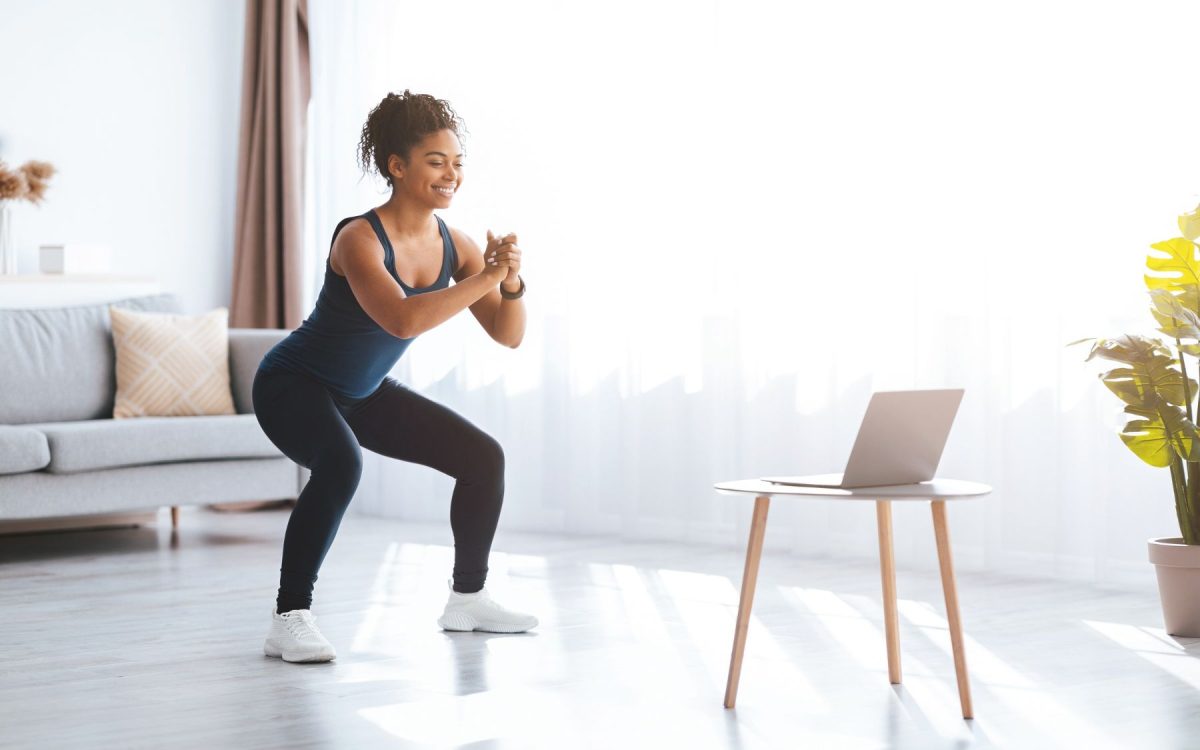
How to Adapt Exercise When Your Lower Body Hurts

Recently, I wrote a column for The Telegraph on The Best Exercises To Do If You Have Bad Knees. With this year’s World Menopause Day focusing on chronic pain at midlife, and World Osteoporosis Day taking place yesterday, it got me thinking more broadly about how we can look after our hips, knees, feet and lower back while continuing to strength train, particularly in midlife.

As I often say, exercise should challenge you, but it shouldn’t be painful. It can be tempting to push through discomfort, but sometimes the smarter option is to listen to your body and adapt. A small change to an exercise can make a big difference

Why can aches and pains become more noticeable at midlife?

For women in particular stiffness and joint or muscle pain become more noticeable during perimenopause and menopause. Aside from hormonal changes, changes in muscle strength, sleep, stress, body composition can all contribute however this doesn’t mean you need to eliminate exercise. However I know this can be a common concern for many of us in starting to exercise or continuing when our bodies don’t feel as strong as they used to. 

The NHS recommends staying active as part of managing long-term pain and gentle, gradually increased exercise can help ease pain. Strength work has an important role: maintaining strong muscles helps us with everyday activities, while strength and flexibility exercises can improve muscle strength, maintain bone density, improve balance and help reduce joint pain. You can read more about how to support your body via the NHS here.

If your knees are painful

This is a common one! Knee pain doesn’t mean you have to stop strengthening your legs. A few simple adjustments can make exercises more comfortable while still helping you build strength and stay active. On Caroline’s Circuits I suggest starting with bodyweight or 2kg dumbbells and building up from there, increasing as you feel comfortable.

  • Modify your squats – Reduce the depth, use a chair as a target or hold onto a stable support.
  • Adapt your lunges – Shorten the range of movement, or swap them for sit-to-stands or supported squats.
  • Try glute bridges – A great way to strengthen your glutes and hamstrings with less stress on the knees.
  • Try Romanian deadlifts – Strengthen the glutes and hamstrings without requiring a deep knee bend.

What about your hips?

If your hips feel sore or stiff, focus on strengthening the muscles that support the joint, particularly the glutes and muscles around the outside of the hips. The focus should be on building strength around the hip in positions that feel comfortable and stable.

  • Try clamshells – Target the muscles around the side of the hips.
  • Add side-lying leg raises – Strengthen the outer hips with very little pressure through the joint.
  • Try banded side steps – Work the glutes and hip stabilisers while keeping you in a standing position.
  • Include hip extensions – Standing or lying hip extensions can strengthen the glutes without requiring deep hip flexion.
  • Consider your stance – A very wide stance may irritate some hips, so find a foot position that feels natural.

If your feet or ankles hurt

Sore feet or ankles can make standing and weight-bearing exercises uncomfortable. You can still strength train by choosing exercises that reduce the amount of pressure going through your feet and ankles. Wear supportive footwear! Well-fitting, supportive shoes can make standing exercises more comfortable, particularly on hard surfaces. I always exercise with a good pair of trainers myself (ON, Hoka and Nike are some brands I like).

  • Seated exercises – Seated upper-body exercises allow you to keep training while taking pressure off your feet.
  • Floor-based exercises – Exercises such as dead bugs and lying leg raises can build strength without standing.
  • Swap calf raises if needed – If lifting onto your toes is uncomfortable, keep your feet flat and gently tense your calf muscles for a few seconds before relaxing. This lets you work the muscles without repeatedly moving through the ankle.
  • Avoid unstable positions – Choose exercises where both feet are firmly supported rather than balancing on one leg.

If your lower back is bothering you

If your lower back is feeling sore or sensitive, certain strength exercises may feel more challenging than usual. It’s also easy to forget about your core when your back hurts, but the muscles around your core play an important role in supporting and stabilising your body. Back pain can sometimes change the way we move and use these muscles, so focus on building strength through your core, glutes and legs with movements that feel controlled and comfortable. If your pain is persistent, do make sure you check in with a healthcare professional.

  • Try bird dogs – A great way to strengthen your core and glutes while working on stability and control.
  • Try a modified plank – Planks help strengthen your core without lots of movement through your lower back. Start with your knees on the floor or your hands supported on a raised surface if needed.
  • Practise abdominal bracing – Gently tighten your abdominal muscles as though preparing for a cough or someone touching your stomach, while continuing to breathe normally.
  • Think about your technique – Slow, controlled repetitions can help you maintain good form and avoid placing unnecessary strain on your back.

Use the 24-hour rule

How you feel after a workout can be just as important as how you feel while you’re doing it. Some muscular effort, fatigue or mild soreness can be normal, but sharp, severe or increasing pain is different.

  • Check in with your body – Notice how you feel during exercise, later that day and the following morning.
  • Look for changes – If your usual joint or back symptoms are noticeably worse and haven’t settled within 24 hours, you may have done too much.
  • Adjust rather than give up – Try reducing the weight, range of movement, repetitions or impact next time.
  • Know when to stop – If an exercise causes sharp or significant pain, or makes you change the way you move to compensate, stop or modify.

A Final Thought

Our bodies may not feel the same every day and our exercise routines don’t need to either. Some days you may feel strong and able to do more. On others, an aching knee, stiff hip or sore back might mean adapting your workout.

What matters is that you keep building strength in a way that works for your body. Modifying an exercise doesn’t make it less worthwhile and consistency over time is far more valuable than pushing through pain and needing several days to recover.

Strength training helps us maintain our muscles, support our bones and joints and stay mobile as we age. So, listen to your body, make adjustments when you need to and remember that there is almost always more than one way to do an exercise.

As always, if you have any questions please do get in touch.

Caroline x

Why Walking Might Be Exactly What You Need This Autumn

In the UK I’ve definitely noticed a shift in the seasons over the last couple of weeks, and on my daily morning walks with my dog Tilly it has really made me think about the importance of walking. I know I’m always talking to you about the benefits of strength training and structured exercise – getting outside and moving is important no matter the time of year – but with the darker, cooler days the motivation can be a little harder. However you will never regret a walk for your mood, body and mind!

Walking is exercise!

Walking is underestimated… We do it to get somewhere, walk the dog or clear our heads, so perhaps we don’t always think of it as “exercise”. Physiologically, your body knows differently. When you walk, the large muscles in your legs and glutes repeatedly contract to move you forwards. Your heart rate rises to deliver more oxygen to those working muscles, your breathing increases and your cardiovascular system has to work harder. Pick up the pace and walking can become a moderate-intensity exercise, helping build endurance. A gentle stroll and a brisk, purposeful walk are brilliant for our bodies. Add hills, increase your speed, wear a weighted vest or walk for longer and you progressively ask more of your heart, lungs and muscles. You don’t have to be running for your cardiovascular system to be getting a workout.

Walking is also a weight-bearing exercise. Every time you take a step, your feet and legs support your body weight and forces travel through your bones. Walking can help reduce the loss of bone and muscle strength too. It doesn’t replace strength training – resistance exercise challenges your muscles and bones in a different and important way – but the two work brilliantly alongside each other. This is one of the reasons I particularly enjoy walking on the days between strength sessions (I walk on the days I train, too).

Strength training deliberately challenges our muscles so that, with adequate recovery, they adapt and become stronger. Recovery doesn’t necessarily mean doing nothing. An easy walk is low intensity enough for most of us that it adds movement without placing the effort on the body as another hard training session.

So rather than thinking of walking as the exercise we do when we’re not really exercising, I think it’s worth seeing it as another piece of your fitness routine, especially on those recovery days. (https://www.nhs.uk/live-well/exercise/walking-for-health/) 

Why colder weather can change how we feel

As autumn moves towards winter, we have fewer daylight hours. Natural daylight plays an important role in our body clock, helping regulate when we feel awake and when we feel sleepy. Getting outside during daylight hours, particularly earlier in the day when possible, helps reinforce natural rhythms.

Cold weather can affect how our muscles feel too. When we’re cold, our bodies work to conserve heat and our muscles can feel stiffer, especially after we’ve been sitting still. Movement helps: as our muscles contract they generate heat, which is why a brisk walk can quickly make us feel warmer and more comfortable.

The colder months can also mean we simply move less. We may walk to fewer places, spend less time outside and sit for longer without really noticing. Making a conscious effort to get outdoors helps keep our muscles working, breaks up sedentary time and gives us valuable natural daylight at the same time. It doesn’t have to be sunny or warm, and it definitely doesn’t have to be an hour-long hike somewhere beautiful. A 15-minute loop around the block counts!

Walking is also brilliant for consistency

Consistency matters with all forms of exercise, but it’s particularly important with strength training. Our muscles adapt to what we repeatedly ask them to do. One strength session can challenge them, but it’s regular training over time that allows us to build and maintain strength. The same principle applies to everyday movement. Getting up and outdoors helps create a routine where being active is something you do regularly rather than something that only happens when you have the time. For those of you at the beginning of your fitness journey or if you feel as though you’re lacking motivation especially at this time of year, as I always say, you just need to start!

  • Walking keeps movement going between strength sessions. It’s an easy way to stay active
  • It helps build the habit of moving. When movement is already part of your day, exercise can feel less like something you have to keep starting again
  • It takes the pressure off. Not every day needs to be a training day. A walk can be enough on days when your energy is lower too
  • Over time, the small things add up. A few strength sessions each week alongside regular walking is far more useful than an intense week followed by several weeks of doing very little

How can I add walking into my routine?

Walking doesn’t have to mean finding an extra hour every day or chasing a huge step target. Start with the week you already have and look for simple opportunities to add a little more movement. That might be a short walk after a strength class, a longer walk on a non-training day with a friend, even ten minutes at lunchtime. The aim is to make walking something that fits around your life and supports your training.

We strength train partly so that everyday movement stays easy as we move through all of life stages. Strong glutes, legs and core support every step you make, while strength and stability around your hips, knees and ankles help with everything from hills and stairs to uneven ground. Strength training doesn’t just make you better at strength training, it helps you do more with your life, for longer! 

Here is an example of a weekly strength schedule (Caroline’s Circuits), including your walks.

DayTrainingWalking
Monday9am Full BodyGentle recovery walk
Tuesday2pm Arms + AbsGentle recovery walk
Wednesday9am Legs + GlutesGentle recovery walk
ThursdayNo strengthLong enjoyable walk
Friday9am Strength HIITGentle recovery walk
SaturdayNo strengthLong enjoyable walk
SundayRESTOptional gentle stroll

A final thought

As we head into the colder, darker months, it can be tempting to think that being active has to happen during a workout. Movement is much simpler than that and is purposeful for consistency. Put on your trainers, grab a coat and get outside, even if it’s only for 10 or 15 minutes.

Walking doesn’t need to be fast, long or particularly impressive to be worthwhile. It can complement your strength training, give your body some gentle movement on recovery days and just as importantly, give your mind a bit of space too. For me I love getting a walk in before a workout and always so great to do after a workout too. I always come back from a walk feeling refreshed no matter the weather. 

As always, if you have any questions please do get in touch.

Caroline x
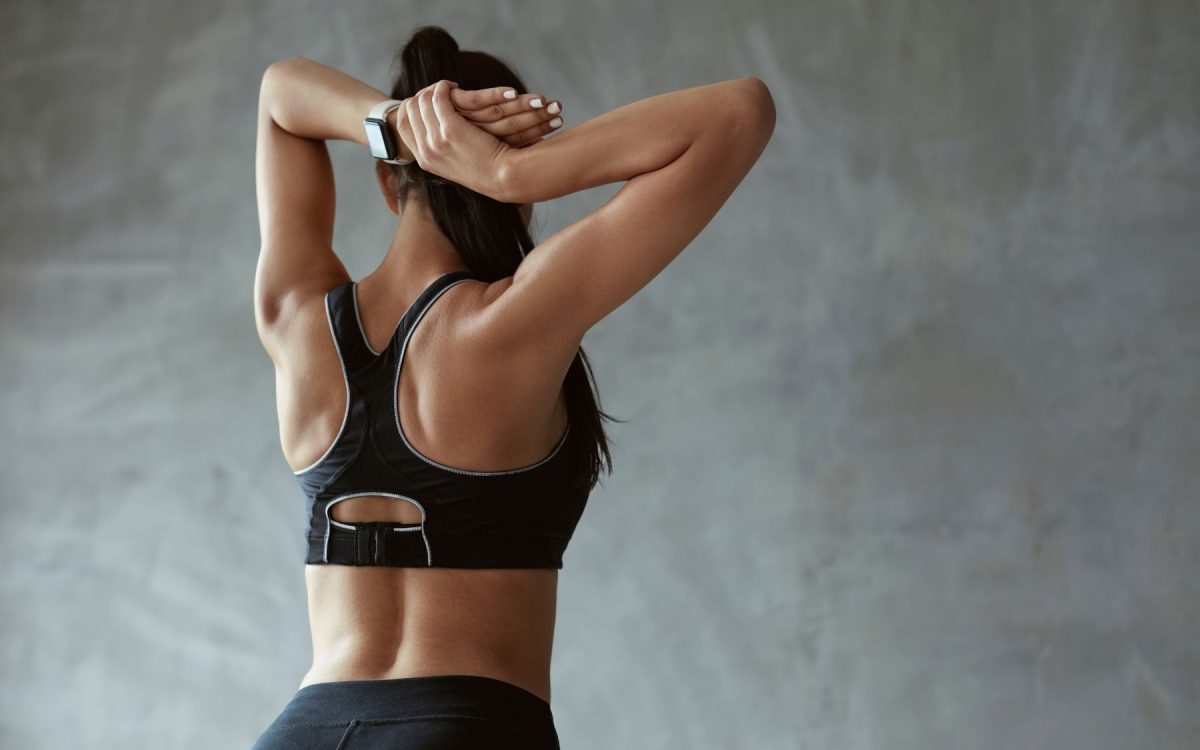
Bras & Burpees: Feeling Supported, Strong and Ready to Move!

I’m often asked what kit I love wearing. For me it’s about so much more than the particular sports bra, leggings or brand I’m wearing. In a recent chat with Amanda Lamb (see last week’s newsletter), Amanda mentioned how having a favourite workout kit makes her feel. She’s not wrong! The right workout kit should make you feel supported and confident. When I put on a kit that fits me well, supports me properly and makes me feel good, it definitely motivates me for my workout. It’s not so much about having the latest matching set or looking a certain way. It’s about how you feel when you put your workout clothes on. Your kit should give you the freedom to move, jump, lift, run and, yes, burpee (I know we all have a love-hate relationship with these, but the right bra should help).

When you feel properly supported, you start focusing on what your body can do. With October being Breast Cancer Awareness Month, I thought this was the perfect opportunity to take a look at what proper support means, what to look for in a sports bra, why the right fit matters and a little reminder to always check in with your GP too.

Why does breast support matter in strength training?

In my strength training platform, Caroline’s Circuits, we’re constantly changing position – from squats and lunges to rows, chest presses, planks and overhead work. A good sports bra should feel secure while still giving you the freedom to lift, reach, bend and move comfortably through every exercise. 

Why do our breasts need extra support? Breasts don’t contain muscle. They are made up of breast tissue, fat and connective tissue and are supported naturally by the skin and internal connective structures. So while strength training can build the muscles underneath the breasts, we can’t actually strengthen the breast tissue itself to stop it moving.

And breast movement isn’t limited to running or jumping. As we bend, twist, reach overhead, move from standing to the floor and work through different movements, our breasts move with us. The amount of movement will vary depending on our individual bodies and the exercise we’re doing, which is why finding the right support can make such a difference to comfort.

A well-fitting sports bra helps to reduce and control that movement. In strength training, we also want to think about freedom around the shoulders and upper body. If you’re performing an overhead press, chest press or row, you don’t want straps digging in, a band riding up or a bra that’s so restrictive that it interferes with your natural range of movement.

If you’re doing Amber’s yoga classes, you might prefer something softer and lighter, a supportive but flexible bra for your strength sessions, and a higher-support option for our Friday HIIT class, where we add more cardio, jumping and, of course, those burpees! 

You can see a guide to a well fitted bra here. Ultimately, your sports bra is part of your workout equipment!

Try the burpee test…

There’s trying on a sports bra, and then there’s working out with a sports bra… Standing still in front of a changing-room mirror can tell you whether you like how something looks, but it doesn’t necessarily tell you how it’s going to feel ten minutes into a workout. So, move in it! Reach both arms above your head. Twist from side to side. Squat. Jog on the spot. Try a jumping jack.

As you move, ask yourself:

  • Does the band stay in place?
  • Do the straps remain comfortably on my shoulders?
  • Do I feel supported when I jump?
  • Is anything rubbing, pinching or digging in?
  • Am I spilling out anywhere?
  • Do I immediately want to adjust it?

5-minute Burpee Sports-Bra Test

Do 3 rounds, 20 seconds rest:

  • 8 standard burpees – move from your squat into a high plank, then back to your feet and finish with a vertical jump. Keep these at a moderate pace.
  • 20 seconds of high knees – this gives you some repeated vertical movement to test how supported you feel.

During each round, notice whether the band rides up, straps dig in or slip, cups shift/gape, or you feel enough breast movement that you instinctively want to hold the bra.

Then finish with 5 slow burpees, deliberately reaching fully overhead and getting your chest close to the floor. This is particularly good for spotting rubbing, underband rolling, spillage or restriction through the shoulders. For a high-impact sports bra, everything should stay put!

Our bodies change – and our sports bras may need to change too

As we age and move through midlife, our breasts may not stay the same. Breast size, shape, position and tissue can change over time. Weight fluctuations, pregnancy and breastfeeding can all play a part, but so can the hormonal changes of perimenopause and menopause. As oestrogen levels change, breast tissue can become less dense and more fatty, while changes in skin and connective tissue can affect firmness and shape. All of this means that the sports bra that fitted you perfectly a few years ago may not be the right fit for your body today. And yet it’s surprisingly easy to keep reaching for the same size simply because “I’ve always been a size X” – without stopping to check whether it still works. So, every now and then, do a little sports-bra check-in.

It’s also a good reminder that clothing and bra sizing isn’t universal. A size that fits brilliantly in one brand may feel completely different in another, and you may even need different sizes across styles from the same brand. As I always say when asked about weight loss or gain, try not to become too attached to the number or letter on the label. 

What sports bra to choose?

Brands that I typically wear are Alo, Varley, Lululemon, Sweaty Betty, Nike… Here are some of my favourite go-tos at the moment from other brands too:

Do make sure to check out brands that work for your body, not just the brand as I’ve mentioned earlier on in this blog. It really is about what fits well and supports you best.

And while we’re talking about breasts…

October is Breast Cancer Awareness Month, it’s a really important opportunity to remind ourselves about breast awareness too. We spend a lot of time looking at our bodies from the outside. Breasts naturally come in all different shapes and sizes and can change throughout our lives. The important thing is getting to know what is normal for you.

That means being aware of how your breasts and chest usually look and feel, including the area around your armpits, so that you’re more likely to notice if something changes. If you do notice an unusual or persistent change, don’t ignore it or try to diagnose it yourself. Speak to your GP or another healthcare professional and have it checked.

Breast Cancer Awareness Month is a brilliant reminder to have these conversations, but breast awareness is something we should take with us outside of October. Just as we learn to listen to our bodies during exercise, we can learn to pay attention to them outside our workouts too. See here for a note from the NHS on what to look out for and what to do if you feel anything unusual.

A final thought

As we know our bodies change throughout our lives. Rather than getting hung up on a number on a label, I think there’s something really positive about learning what our bodies need now. That might mean a different sports bra, a little more support or simply paying more attention to how something feels when you move. It also means noticing when something doesn’t feel normal for you.

Ultimately, the best kit is the kit that lets you forget about what you’re wearing and get on with enjoying what your body can do. Find the support that works for you, keep checking in with your body and keep moving in a way that makes you feel strong and confident.

Let me know if your sports bra can survive the burpee test…

Caroline x