How Heavy Should I Be Lifting?
One of the most common asked questions I get is: ‘What weights should I be lifting?’ There is not one size fits all here and there is not one simple answer. The right weight for you will depend on several factors, including the exercise programme you’re doing, the number of repetitions you’re completing, your experience with strength training and what you’re hoping to achieve as your final goal. There isn’t one particular weight that everyone needs to lift to get stronger. BUT there is progressive overload, challenging your muscles so that you continue to build strength. Read on!
This is an important point to understand, particularly as we hear more about the benefits of strength training as we get older. While progressively challenging your muscles is an important part of building strength, that doesn’t necessarily mean you always need to lift heavy weights. Lighter weights can still be effective, particularly when used with the right number of repetitions and performed with good technique. The key is choosing a weight that provides an appropriate level of challenge for your current ability and gradually increasing that challenge as you become stronger.
What Weights Do I Need?
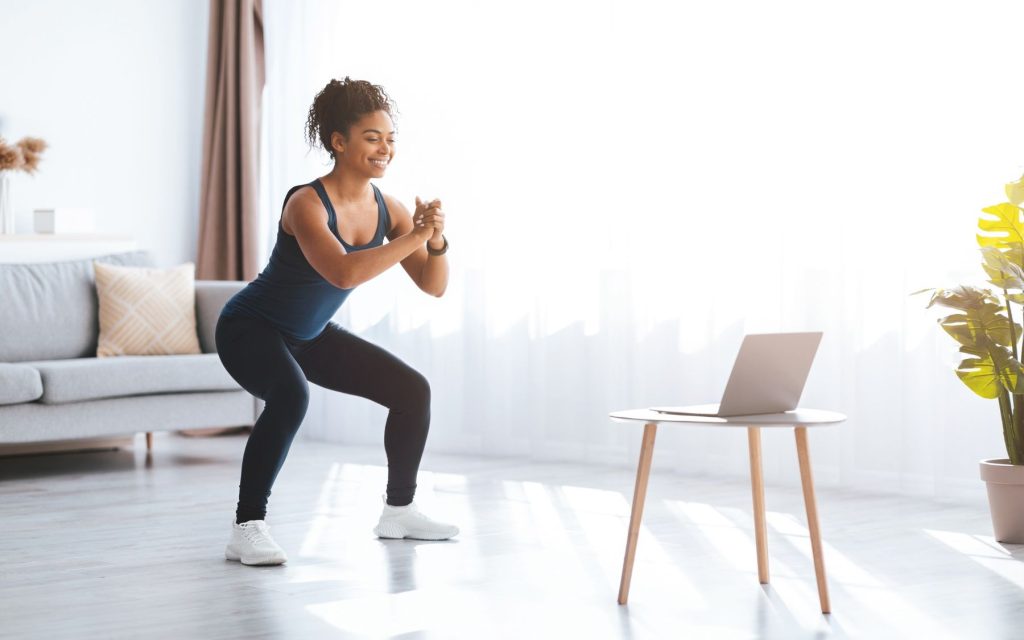
Start with what you have. If you’re training at home, you may not have a whole collection of dumbbells. Squats, lunges, rows, presses, curls and many other exercises can all be performed at home and you can do a huge amount with a small selection of equipment. If you’re new to resistance training, I’d much rather you start with something that feels manageable and learn how to perform the exercises properly before thinking about how heavy you can lift.
There’s already plenty to think about when you’re learning a new movement. Your posture, positioning, range of movement and breathing. Getting those basics right gives you something to build on. On my platform I always suggest starting with 2kg (or bodyweight) and building up from there – different muscles have different levels of strength, so your weights can vary throughout your workout.
How should the weight feel?
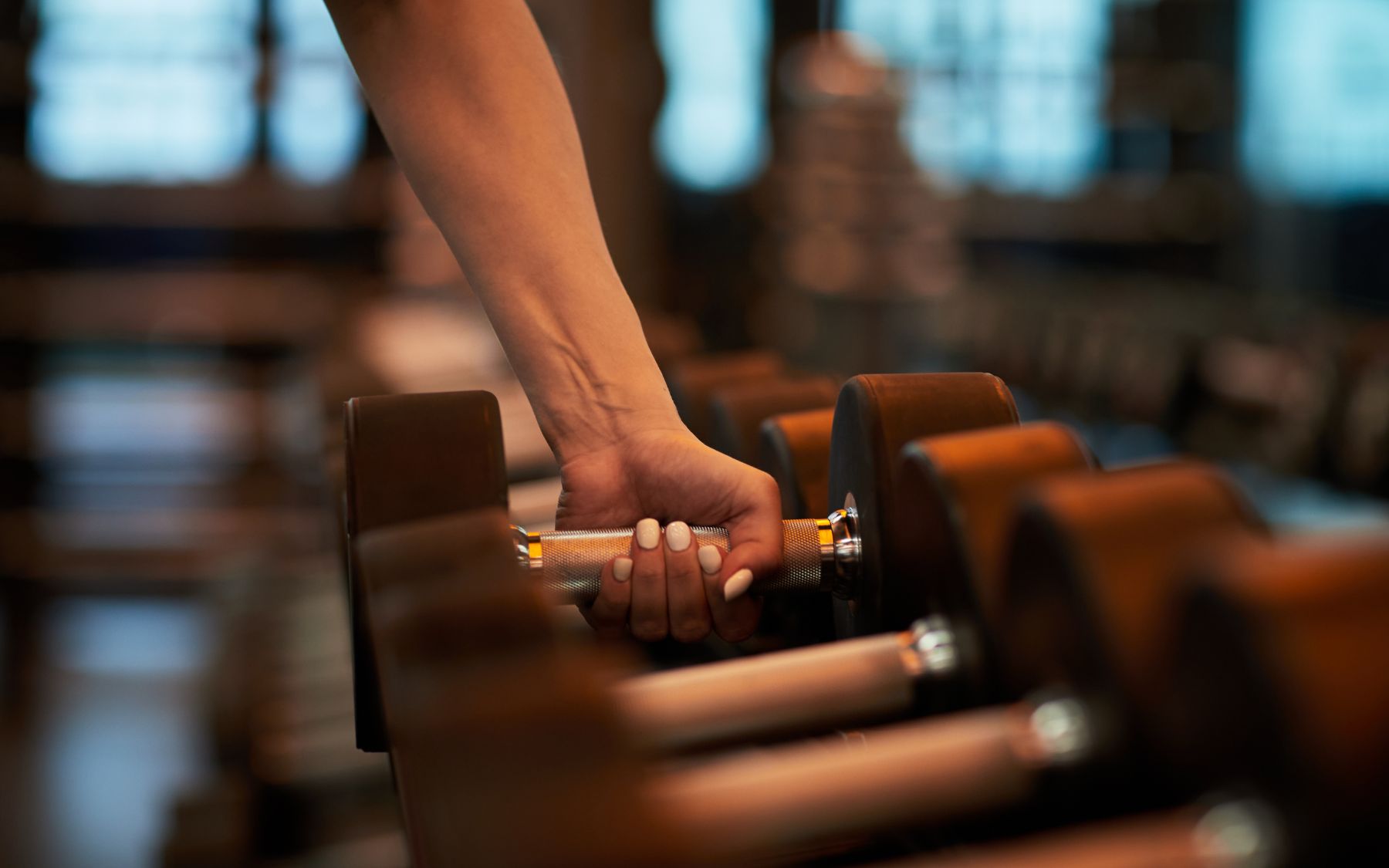
Rather than getting too caught up in the number written on the dumbbell, think about how the exercise feels. As you work through a set, the repetitions should become more challenging, but you should still be able to maintain good control and technique. I always say that all movements should feel challenging but never painful.
If you finish and feel like you could easily have done another ten repetitions, you’re likely ready for more resistance. On the other hand, if you’re struggling to control the weight, swinging the dumbbells around or changing your technique because they’re too heavy, it’s probably time to reduce it.
A useful rule of thumb is that your weight should:
- challenge your muscles
- become harder towards the end of the set
- allow you to maintain good technique
- feel appropriate for the exercise you’re doing
A heavier dumbbell doesn’t automatically mean a better workout – I would always choose good technique with a lighter weight over poor technique with a heavier one. Remember too that adding extra reps, more time under tension and a longer workout in general are also all going to add to the fatigue. Even just using bodyweight or a resistance band can add to the stimulus for the muscle.
Why lifting heavier matters
Our muscles become stronger when we regularly ask them to work against resistance. As you get stronger, a weight that once felt challenging will eventually become easier. Increasing the weight allows you to continue giving your muscles enough resistance to keep building and maintaining strength. Essential in midlife to stay stronger as we age.
This is known as progressive overload – gradually increasing the weight as your strength improves. It might mean moving from 2kg to 3kg dumbbells, or from 5kg to 6kg. The numbers themselves aren’t important, what does matter is that you’re gradually increasing the resistance from where you started. If you continue using a weight that has become easy, you’re no longer giving your muscles the same level of challenge. Increasing the weight when you’re ready helps you continue to progress as your strength develops.
On my platform, in our Monday full body power class, we tend to lift heavier especially when we are focusing on the larger muscle groups such as the legs, the chest, the back. Similarly our Wednesday classes are specifically targeted at the glutes, another large powerhouse of a muscle so we tend to work with slightly heavier weights or time under tension with a band. The glutes and other larger muscles of the lower body can generally handle more resistance than the arms, so using a heavier weight allows us to work them at an appropriate level for their strength.
The key is not to lift as heavy as possible, but to gradually increase the weight as your body becomes stronger.
Why do we continue to lift with lighter weights?
A common misconception is that when we start progressing, we no longer need our lighter weights. This isn’t correct, after years of strength training I still incorporate lighter weights in my workouts and throughout my weekly classes. Lighter weights can be particularly useful when we’re working on muscular endurance, your muscles’ ability to keep working repeatedly or for longer periods. I love my small weights for an arms finisher for example!
Don’t underestimate the lighter weights! A pair of light dumbbells might feel very manageable when you first pick them up, but after several minutes of repeated movements, you’ll feel differently, trust me. And again you can also make lighter weights more challenging without buying anything new. Try increasing your repetitions, adding another round, reducing your rest time or slowing the movement down.
When should I go heavier?
You don’t need to automatically buy heavier dumbbells every few months. But there will come a point when the weights you have simply aren’t challenging you enough for certain exercises. If you’re consistently completing your repetitions with good form and finishing a set feeling like you could comfortably do considerably more, that’s a good time to think about progressing.
If you feel comfortable lifting with your 2kgs, a pair of 4kgs could be a good next step. If you’re comfortable lifting 5kgs, a 7kg pair could be your next to purchase – do still keep hold of your lighter weights. You don’t have to increase everything at once. You might be ready for heavier weights for squats and lunges but still use lighter dumbbells for shoulder exercises. In an ideal world you would have two sets, one heavier set for legs for example and one lighter set for upper body. However I do appreciate that dumbbells are now very costly so make them work for you.
It’s also important not to compare your weights with someone else’s. Social media makes this particularly difficult because it’s easy to see somebody lifting a huge pair of dumbbells and feel that you should be doing the same. Remember, you don’t know how long they’ve been training, where they started or whether that weight would be appropriate for you. It’s important to look at your own progress – if you started with 2kg and you’re now comfortably using 4kg, that’s progress. If you can do more repetitions or move with better control, that’s progress too.
You don’t have to lift heavy every workout
If you’re nervous about lifting heavier, there’s no need to rush. Build your confidence, get comfortable with the exercises and gradually introduce more resistance when you feel ready. Small increases can add up to significant improvements over time.
Some days you’ll feel strong and energetic. Other days you might be tired, have slept badly or simply have less energy. Remember you can adjust your workout accordingly. Using heavier weights when you feel good and lighter ones when you need to take things a little easier is perfectly sensible. Being able to adapt your training isn’t a sign that you’re not working hard enough. It’s part of learning how to train consistently and sensibly.
A final thought
I think the most important thing is not to get too caught up in the number written on the side of your dumbbell. It’s very easy to think that getting stronger means lifting more than someone else, but strength isn’t a competition. The person you really need to compare yourself with is the person you were when you started. Maybe you’re now using weights that would have felt impossible a year ago. Maybe you can do more repetitions, move with better control or complete a workout that once felt incredibly difficult. These are all signs that you’re getting stronger!
As always, any questions please do get in touch.
Caroline x