The Power Of Resistance Bands!
There is a HUGE misconception that resistance bands are only useful for rehabilitation or low-intensity workouts, but they are a highly effective way to build muscle and strength when used correctly.
Muscle growth happens when your muscles are placed under enough tension that they’re forced to adapt. During strength training, tiny amounts of damage and stress occur within the muscle fibres. As your body repairs these fibres, they become stronger. Resistance bands are more than capable of providing this challenge by placing your muscles under continuous tension throughout each exercise.
If you choose a band that’s challenging enough and perform each exercise close to the point where you couldn’t complete many more good-quality repetitions, you’re creating the stimulus needed for muscle growth. For those of us in midlife in particular, resistance bands can provide everything you need for an effective full-body workout, which is one of the main reasons I use them in my classes.
How Do Resistance Bands Work?
Resistance bands work by creating elastic tension as they stretch. As you move through an exercise, the band resists that movement, forcing your muscles to contract in order to overcome the tension. The more the band stretches, the greater the resistance becomes, meaning the exercise gradually becomes more challenging throughout the movement.
This increasing resistance challenges your muscles through a full range of motion, making bands an effective tool for building strength and muscle, while also improving stability, mobility and flexibility. They’re available in a range of resistance levels, making it easy to adjust the difficulty as you get stronger.
Do Bands Support My Joints?
Resistance bands are a fantastic way to build strength while being kinder to your joints plus they’re particularly beneficial during midlife:
- Less stress on your joints – Resistance builds gradually as the band stretches, rather than placing an immediate heavy load on your joints
- Improves joint stability – Strengthening the muscles around your shoulders, hips, knees and ankles helps support and stabilise your joints during everyday movement
- Encourages better control – Bands promote slow, controlled movements, helping you focus on good technique and reducing strain
- Suitable for all fitness levels – Resistance is easy to adjust – choose a level that’s right for you and progress safely as you get stronger
Are Resistance Bands Better Than Weights?
It’s one of the questions I’m asked most often, but the answer isn’t that one is better than the other. Resistance bands and weights each have their own benefits.
Weights rely on gravity, so your muscles work against the same load throughout the movement, although some parts of an exercise will naturally feel harder than others because of your body’s mechanics. (Obviously you can increase the weight a lot more with the range of dumbbells on offer so would be the first choice if you are consistently lifting heavy). However bands create increasing tension as they stretch, meaning the exercise often becomes more challenging towards the end of the movement, where you’re typically at your strongest. This difference is one of the reasons many athletes and strength coaches use both bands and weights in their training.
For most women, especially in midlife, the best choice isn’t about picking one over the other. It’s about using the equipment that allows you to train consistently and challenge your muscles gradually.
Why Does Progressive Overload Matter?
If you’re a member of my platform, you’ll know I’m always talking about progressive overload.
It’s one of the most important principles for getting stronger. Progressive overload simply means asking your muscles to do a little more over time so they continue adapting. That doesn’t always mean lifting a heavier dumbbell. You can progressively overload by:
- Moving to a stronger resistance band
- Increasing the number of repetitions
- Adding another set
- Slowing down the movement to increase time under tension
- Reducing rest between sets
- Improving your technique and range of motion
What To Target?
See below for the key areas to target. The key to results is choosing a resistance level that challenges you, maintaining good form and slowly increasing the difficulty over time.
Lower Body: Glutes & Legs – build strength, stability and power with exercises like:
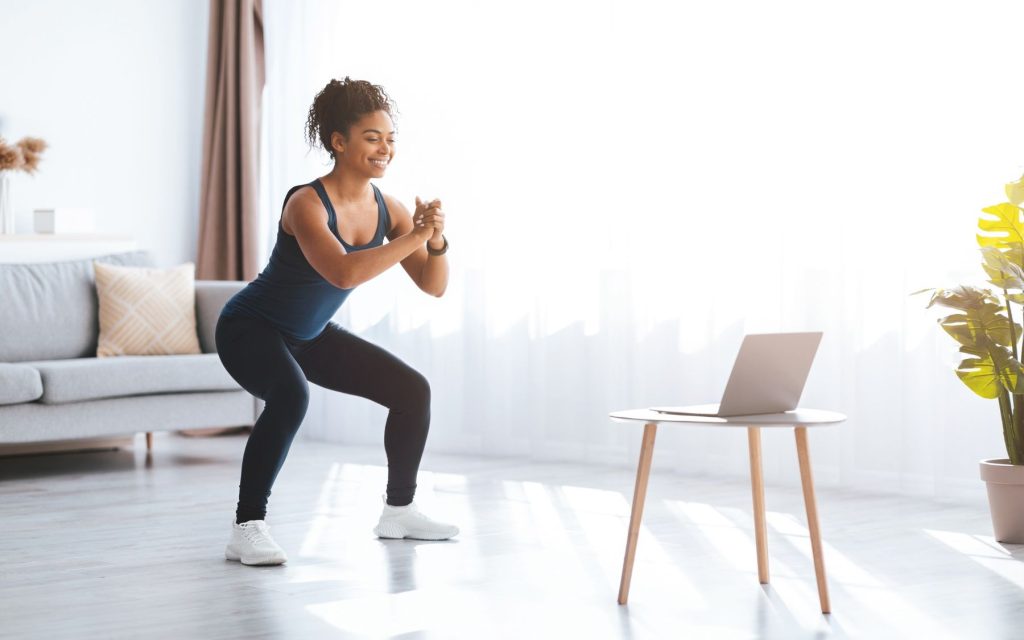
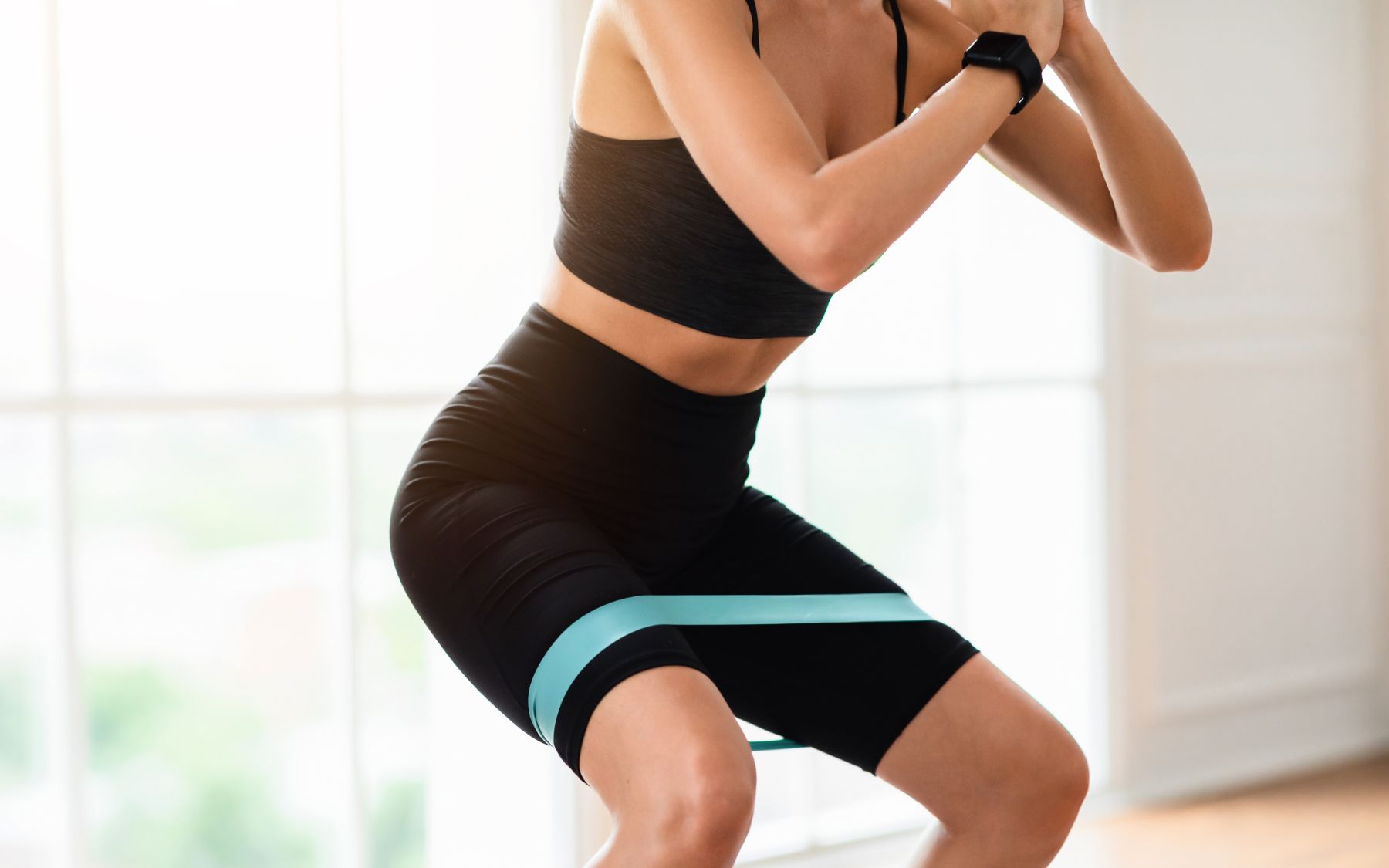
- Banded squats – target glutes, quads and core
- Glute bridges – strengthen and activate the glutes
- Lateral band walks – improve hip stability and strengthen outer glutes
Upper Body: Back, Shoulders & Arms – support posture and everyday strength with:
- Band rows – strengthen the upper back
- Shoulder presses – build shoulder strength
- Bicep curls & tricep extensions – tone and strengthen the arms
Core: Stability & Balance – train your core to improve control and support your movements:
- Band rotations – improve control and coordination
- Dead bugs with resistance – build deep core strength
A Final Thought
Resistance bands are incredibly versatile and can help you build strength, improve muscle tone, increase mobility and achieve brilliant results. Focus on good technique, choose a resistance that challenges you and gradually increase the difficulty over time.
If you’re looking to buy new bands, I personally use Bala bands or Gritin on Amazon have a great selection too. I’m often asked which I prefer from elastic or fabric bands, it’s entirely up to personal preference.
Remember, getting stronger isn’t about using the heaviest equipment – it’s about consistently challenging your muscles. You might be surprised at what you can achieve with something as simple as a resistance band!
As always, if you have any questions please do get in touch.
Caroline x