Why Targeting All Muscle Groups Matters!
Our bodies are made up of interconnected muscles that work together to create movement, stability and strength. Functional movement. Every day, we rely on this connection – whether we’re walking, lifting, carrying, reaching or simply maintaining good posture. Because our muscles don’t work independently, our training shouldn’t either.
A balanced approach to exercise means giving attention to every major muscle group over time. By doing so, we build strength more evenly, improve stability and coordination and support better movement in everyday life. As we age, maintaining strength throughout the whole body becomes even more important, helping us stay active, independent and confident in the way we move…
Why Full Body Training Matters
Understanding the difference between full body training and isolating specific muscle groups is an important part of creating a balanced and effective fitness programme. Both approaches have unique benefits and together they create a well-rounded routine that supports long-term health and fitness.
Full body training allows us to work multiple muscle groups together in one session, reflecting the way our bodies are naturally designed to move. Rather than focusing on one area in isolation, these workouts develop overall strength, improve coordination and enhance movement quality. Because more muscles are working at the same time, full body sessions also elevate your heart rate, combining the benefits of resistance training with cardiovascular conditioning. Regular full body workouts create a strong foundation for everything else and my Monday full body class definitely is the most popular session, it sets you up for the week ahead.
Why We Isolate Muscle Groups
You’ll often hear me talk about the importance of rest and recovery! While recovery may simply look like taking a day away from training, it’s so much more than that. When we strength train, we create tiny amounts of stress within our muscles. During recovery, the body repairs and rebuilds those muscle fibres, allowing them to become stronger and more resilient over time. This is how we develop strength, improve muscle function and continue to progress.
If we trained the same muscles intensely every day, our bodies wouldn’t have enough time to recover and adapt. Over time, this could lead to increased fatigue, reduced performance and a greater risk of injury.
This is where isolating specific muscle groups becomes so valuable. While full body training provides an essential foundation, sessions dedicated to individual areas (such as my Tuesday and Wednesday classes) allow us to challenge those muscles more effectively without placing excessive stress on the entire body at once. It also brings variety to your workouts, helping to keep training motivating and progressive.
Why HIIT Matters
Alongside strength training, cardiovascular fitness is another essential part of a balanced exercise programme – that’s where HIIT comes in. High-Intensity Interval Training (HIIT) alternates short periods of higher-intensity effort with periods of recovery, providing an efficient way to improve both cardiovascular fitness and muscular endurance.
When strength-based exercises are incorporated into HIIT, you gain the benefits of resistance training while also challenging your heart and lungs. This combination can improve stamina, increase calorie expenditure, enhance overall conditioning and build both physical and mental resilience.
My Weekly Programme
After more than 25 years of teaching fitness, I built Caroline’s Circuits around these principles. I wanted to create a strength training programme that was accessible to everyone, could be completed from home and provided a balanced approach to training.
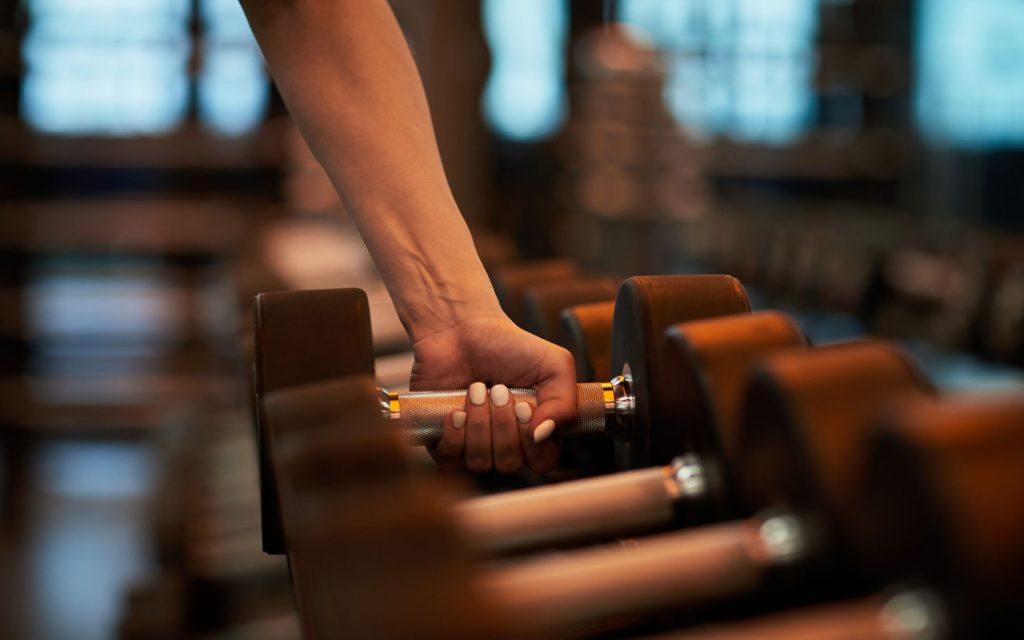
My live classes are available both live and on demand four times a week and are suitable for all ages and fitness levels. All you’ll need is a mat, a short loop resistance band for Wednesday’s class and a pair of dumbbells. Choose weights that are right for your own ability and fitness level – remember, consistency will achieve more than lifting too heavy.
Monday – Full Body (9am UK time)
We begin the week with a complete full body workout, activating every major muscle group to build strength, improve movement and set the tone for the week ahead.
Tuesday – Arms & Abs (2pm UK time)
After Monday’s full body session, we shift our focus to upper body strength and core stability. Strong arms support everyday pushing, pulling and lifting movements, while a strong core improves posture, balance and helps protect the lower back.
Wednesday – Legs & Glutes (9am UK time)
Your lower body contains some of the largest and most powerful muscles in your body. Building strength in your legs and glutes supports everyday movement while helping protect your knees, hips and lower back.
Thursday – Rest or Active Recovery
Recovery is just as important as training itself. This is when your muscles repair, replenish energy stores and adapt to the work you’ve completed earlier in the week.
I’m often asked what you should do on recovery days. Gentle activities such as walking, stretching or mobility work can reduce stiffness, improve circulation and leave you feeling refreshed and ready for Friday’s session.
Friday – Strength HIIT (9am UK time)
We finish the week by combining strength training with high-intensity intervals. Unlike traditional HIIT, Strength HIIT allows you to build muscle while elevating your heart rate. Often we do these sessions with bodyweight alone – don’t be fooled, they are still a challenge!
A Final Thought
Fitness isn’t about focusing on one part of the body – it’s about creating balance. Every muscle group has an important role to play and training them all helps us move more efficiently, build strength evenly and support our bodies. By combining full body workouts, focused muscle group sessions, HIIT and adequate recovery, you’re giving your body everything it needs to become stronger and fitter!
As always, if you have any questions please do get in touch.
Caroline x