How strength training can help your running! 

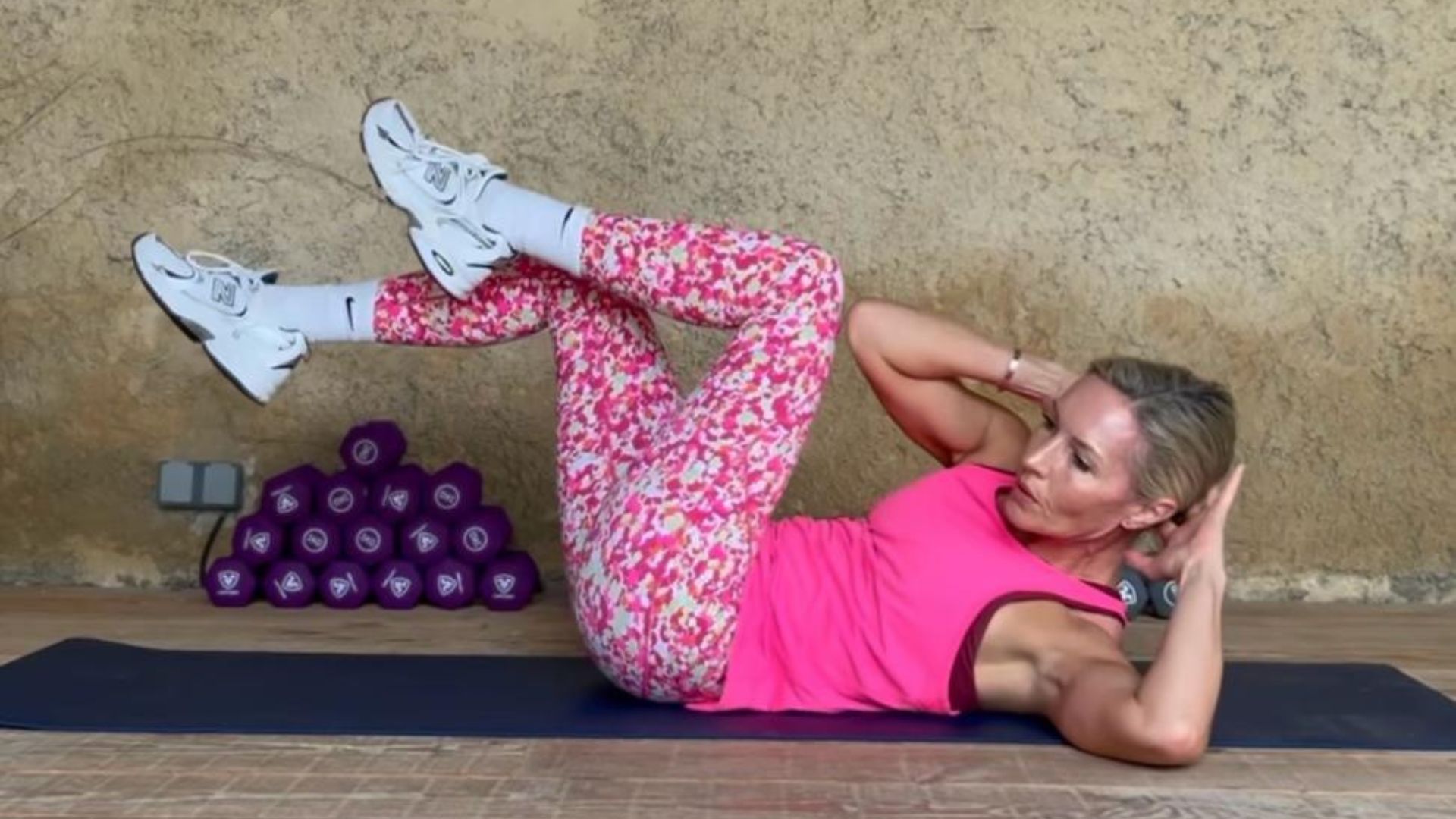
With the London Marathon just around the corner it is most certainly running season but how many runners are including strength training in their training plans? Strength training can significantly benefit your running performance by providing a range of physiological and biomechanical advantages. Here are some reasons why incorporating strength training into your routine can help with running:

Improved Muscle Strength: Strength training targets specific muscle groups, including the core, quadriceps, hamstrings, and glutes. Strengthening these muscles can enhance your ability to generate force and power while running.

Increased Running Economy: Strength training improves the efficiency of your movements, which translates into a better running economy. This means you use less energy to maintain a given pace, allowing you to run longer distances more comfortably.

Injury Prevention: Strength training helps to address muscular imbalances and weaknesses, reducing the risk of injuries. Strengthening the muscles around joints provides better support and stability, minimising the impact on joints during running.

Enhanced Power and Speed: Power generated from stronger muscles can contribute to a more explosive push-off during each stride. This can result in improved running speed and performance.

Better Running Form: Strength training, especially exercises targeting the core and lower body, can help improve overall posture and running form. Maintaining proper form is crucial for efficiency and injury prevention.

Increased Endurance: Building muscular endurance through strength training can help delay the onset of fatigue during a run. This is especially beneficial for long-distance runners.

Improved Joint Health: Strengthening muscles helps to stabilise joints and absorb impact more effectively, reducing the strain on joints such as the knees and ankles during running.

Enhanced Coordination and Balance: Strength training exercises often involve multi-joint movements called compound exercises, which can improve coordination and balance. This is valuable for maintaining stability and control while running, especially on uneven surfaces.

Specificity in Training: Tailoring strength training exercises to mimic running movements can enhance the neuromuscular adaptations specific to running. This specificity can lead to more effective and targeted improvements in running performance.

Incorporating strength training alongside your running routine is essential. Focus on compound exercises that engage multiple muscle groups, such as squats, lunges, deadlifts, and core exercises. It’s important that the strength training plan complements your running goals and takes into account your individual fitness level and needs but when the two are paired the results speak for themselves! 

Are you a runner? 

Caroline x 
Time to get outside!

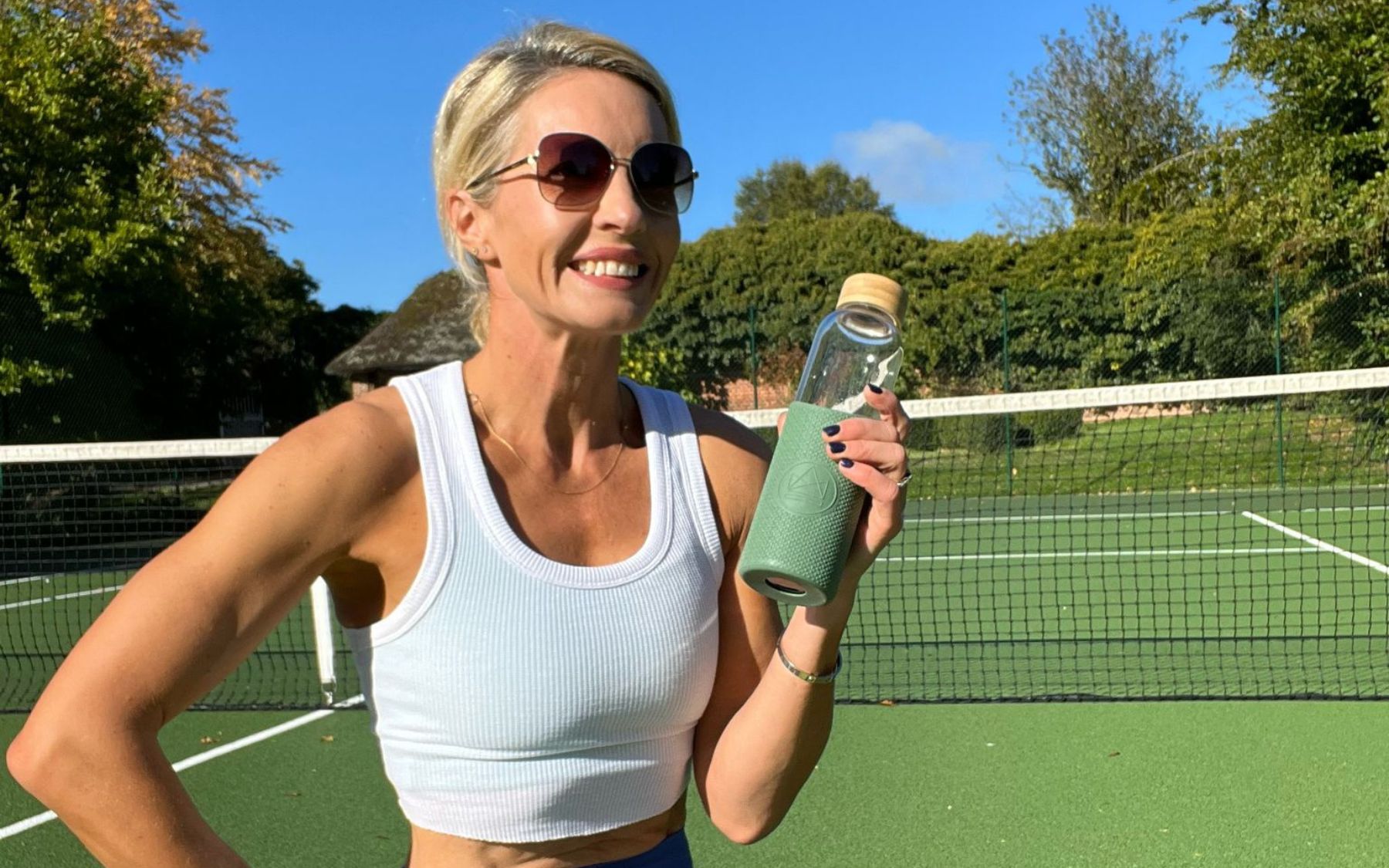
The weather is getting warmer, the days are longer, it is time to make the most of the fresh air and get outside. Whether it’s for a walk with the dog, a hike in nature or taking your mat outside to do a workout, any outdoor activity can have numerous mental and physical benefits. Many of you know that my daily non-negotiable is my dog walk – i just love it and always feel like I have a clearer head, brighter ideas and am ready to get on with the day afterwards! Here are some of my favourite benefits to the great outdoors:

Physical Benefits:

Increased Vitamin D Production:

Exposure to sunlight stimulates the production of vitamin D in the skin. Vitamin D is essential for maintaining healthy bones, supporting the immune system and promoting overall well-being.

Improved Sleep:

Exposure to natural light, especially during the day, can help regulate the body’s circadian rhythm, which may contribute to better sleep quality. Natural light exposure can also help regulate melatonin production, a hormone associated with sleep.

Enhanced Physical Activity:

Being outdoors often involves physical activities such as walking, running, hiking, or cycling. Regular physical activity is associated with numerous health benefits, including improved cardiovascular health, weight management and reduced risk of chronic diseases.

Better Air Quality:

In many cases, outdoor air is fresher than indoor air. Being in nature allows you to breathe in cleaner air, which can positively impact respiratory health and overall well-being.

Reduced Stress Levels:

Spending time outdoors has been linked to lower cortisol levels, the hormone associated with stress. Natural environments provide a sense of tranquillity and can help reduce the physiological and psychological effects of stress.

Boosted Immune System:

Some studies suggest that spending time in nature may have a positive impact on the immune system. Fresh air, sunlight, and exposure to natural elements can contribute to a stronger immune response.

Mental Benefits:

Stress Reduction:

Nature has a calming effect on the mind. Spending time outdoors has been shown to reduce stress levels, alleviate symptoms of anxiety, and improve mood.

Improved Concentration and Focus:

Exposure to nature has been associated with enhanced cognitive function, including improved concentration and attention. This is sometimes referred to as the “restorative effect” of nature on mental fatigue.

Enhanced Creativity:

Time spent in natural surroundings has been linked to increased creativity and problem-solving skills. Nature can provide a peaceful and inspiring environment that fosters creative thinking.

Elevated Mood:

Outdoor activities, especially those in green spaces, have been linked to improved mood and decreased symptoms of depression. The connection with nature can have a positive impact on emotional well-being.

Increased Happiness:

Being in nature is often associated with feelings of happiness and contentment. The sense of release and relaxation you often feel when outdoors in nature can contribute to an overall positive outlook on life.

Overall, incorporating outdoor activities into your routine can have a holistic impact on both your physical and mental well-being. Whether it’s a short walk in the park or a more extended outdoor adventure, spending time in nature is a valuable aspect of a healthy lifestyle.

What’s your favourite outdoor activity? 

Caroline x

Strength vs Cardio?

This is a question I get asked all the time… which is better – strength or cardio? Before we get into the answer, when I say cardio I mean running, walking, cycling, swimming, hiking etc and strength training I am referring to resistance training weights, bands, circuit training etc – basically anything that means you are working against resistance to build strength. The answer to the strength vs cardio question also depends on your goals. 

The choice between strength training and cardio training depends on your fitness goals and overall health objectives. Both types of exercise offer unique benefits, and ideally, a well-rounded fitness routine would incorporate elements of both. Here’s a breakdown of the benefits of each:

Strength Training

  • Muscle Building: Strength training is effective for building and toning muscles. It helps increase lean muscle mass, which can boost your metabolism and aid in weight management.
  • Bone Health: Resistance training can improve bone density, reducing the risk of osteoporosis.
  • Functional Strength: It enhances overall physical strength, making daily activities easier and reducing the risk of injuries.
  • Metabolic Benefits: Strength training can contribute to improved insulin sensitivity and better management of blood sugar levels.
  • Body Composition: Strength training builds lean muscle mass which is often a goal when embarking on an exercise programme. To build lean muscle you need to work the muscle under resistance which is exactly what strength training does.
  • Joint Health and Injury Prevention: Strengthening muscles around joints provides added support, reducing the risk of injuries and promoting joint health. 

Cardiovascular Training

  • Heart Health: Cardio exercises, like running, cycling, and swimming, improve cardiovascular health by enhancing heart and lung function.
  • Weight Loss: Cardio workouts are effective for burning calories and can contribute to weight loss or weight maintenance.
  • Stress Reduction: Cardiovascular exercise releases endorphins, which can help reduce stress and improve mood.
  • Endurance: There is no denying that regular cardio training improves endurance and stamina, allowing you to engage in sustained physical activities for longer periods. There is no supplement for running if you’re training for a marathon!

In many cases, a balanced fitness routine that includes both strength and cardio training is ideal. This approach provides comprehensive health benefits, including improved cardiovascular health, muscle strength, flexibility, and overall fitness. The specific ratio of strength to cardio training can vary based on individual goals, fitness levels, and preferences. 

Additionally, it’s essential to listen to your body and gradually progress in intensity to avoid overtraining and reduce the risk of injuries.

So what is my verdict, strength or cardio…. you might have guessed it but it is STRENGTH!! It is better for fat loss and building lean muscle but cardio shouldn’t be ignored, it has some great benefits and the two work very well in tandem! My advice (if you’re looking to tone up, build some lean muscle and improve your fitness) is to try doing a variety of both – 3-4 strength sessions per week alongside a couple of cardio workouts is ideal (of course with some mobility and stretching too if you can). It is also important to remember the nutrition side of things if you want to see results, maintaining a healthy, balanced diet with plenty of fresh fruit and veg and protein as well as complex carbs will tick the boxes for hitting those goals you have set! And always always take one if not two rest days.

As always, any questions please do get in touch. 

Caroline x

Why all women should strength train

Anyone who has followed me for a while will know that I am a HUGE advocate of strength training, especially for women and even more so for those in midlife. I really cannot emphasise enough the importance of training in this way at this time of life. For me it has been a way of life now for many years and I can honestly say that I feel fitter, stronger and healthier now in my 50s than I did in my 20s and 30s. However for some of you who are new to lifting weights you may wonder what the key reasons and benefits are so this blog is to share a little more of this with you. 

Incorporating strength training into a fitness routine can contribute to overall health and well-being. Here are several reasons why it is essential to have it as part of our routine especially after the age of 35:

Enhanced Bone Health:

Resistance training is effective in promoting bone density, reducing the risk of osteoporosis, especially important for women as they age. The drop in bone density during and after menopause can be offset or regained with a strength training programme. Not only can we maintain good bone health but we can also build new bone.

Improved Metabolism and Weight Management:

Building lean muscle mass through strength training can increase the resting metabolic rate, making it easier to manage body weight and body composition. To build lean muscle you need to work the muscle under resistance which is exactly what strength training does.

Increased Strength and Functional Fitness:

Strength training improves overall physical strength, making daily tasks easier and reducing the risk of injuries. It enhances functional fitness and helps you to maintain independence as you age. To find out more about functional fitness take a look here.

Boosted Metabolic Health:

Strength training can improve insulin sensitivity, helping with better blood sugar control and reducing the risk of type 2 diabetes.

Hormonal Balance:

Regular strength training can positively impact hormonal balance, including promoting the release of endorphins, which can improve mood and reduce stress. Have you ever heard someone say they feel less happy and energized after a good training session?!

Joint Health and Injury Prevention:

Strengthening muscles around joints provides added support, reducing the risk of injuries/falls and promoting joint health. 

Posture and Core Strength:

Strength training, especially compound exercises and those targeting the core, contributes to better posture and stability. In a world where we are often hunched over phones and computers this is definitely a good thing! 

Empowerment and Confidence:

Gaining strength and seeing physical improvements can boost self-esteem and confidence. Feeling strong can have positive effects on mental well-being – knowing you can lift that box, open that jar or carry that bag is empowering, knowing you can just do it!

Offset Ageing:

As women age, maintaining muscle mass becomes crucial. Naturally we lose it as we get older, especially post-menopause and strength training can help offset age-related muscle loss, thus maintaining strength, mobility and independence.

Improved Sleep:

Regular exercise, including strength training, has been linked to better sleep quality, promoting overall well-being. In turn it also helps boost our immunity.

Variety in a Fitness Routine:

Incorporating strength training adds variety to a fitness routine, preventing boredom and keeping workouts interesting. There are so many different exercises and variations of each exercise you can never get bored! 

It’s essential to note that strength training doesn’t mean heavy lifting or bodybuilding. It can be adapted to individual fitness levels, preferences, and goals. The key is being consistent, building up gradually and enjoying the benefits! Strength training really is a valuable component of a well-rounded fitness routine for women of all ages and fitness levels.

 What’s your favourite strength exercise? Do you prefer upper body, legs or full body?

Caroline x

Exercise Myth busting! 

There are so many exercise myths flying around at the moment so I thought that it might be useful to go through some of the most common ones that I get asked and bust them for you! Here are some common offenders:

  • Myth: Spot Reduction Works
    • Reality: Targeting specific areas for fat loss (like doing endless ab exercises for a flat stomach) is a myth. Fat loss and muscle gain occurs uniformly across the body through a combination of a balanced diet and regular exercise.
  • Myth: No Pain, No Gain
    • Reality: While some discomfort and muscles soreness is expected during exercise, pain should not be the norm. Pushing yourself too hard can lead to injuries. It’s important to distinguish between the discomfort and challenge of exertion and actual pain.
  • Myth: Crunches are the Best for Abs
    • Reality: While crunches can strengthen the abdominal muscles, they aren’t the only or the best exercise for a strong core. Planks, leg raises, and other exercises are also incredibly effective. Compound moves such as squats and lunges also engage the deep core muscles which is vital for building strong abs.
  • Myth: Cardio is the Only Way to Lose Weight
    • Reality: While cardio is beneficial for burning calories, strength training is equally if not more effective. Building lean muscle can boost your metabolism, helping with weight loss and maintenance.
  • Myth: Women Will Bulk Up with Weights
    • Reality: Many women fear that lifting heavy weights will make them bulk up. In reality, women typically do not have the testosterone levels necessary for significant muscle hypertrophy. Strength training can help sculpt and tone without excessive bulking.
  • Myth: Exercise Can Compensate for a Poor Diet
    • Reality: While exercise is crucial for health, it cannot completely offset the effects of a poor diet. Both diet and exercise play distinct roles in overall well-being.
  • Myth: The More Exercise, the Better
    • Reality: Overtraining can lead to fatigue, increased risk of injury, and other health issues. Rest and recovery are essential components of a balanced fitness routine.
  • Myth: You Can’t Exercise if You’re Sick
    • Reality: Mild to moderate exercise can be beneficial during mild illnesses. However, if you have a fever or severe symptoms, it’s best to rest and allow your body to recover.
  • Myth: Stretching Prevents Injuries
    • Reality: While stretching is essential for flexibility, it might not prevent injuries on its own. A well-rounded warm-up, proper form during exercises, and overall conditioning are also crucial.
  • Myth: Exercise is Only About Physical Health
    • Reality: Exercise has numerous mental health benefits, including stress reduction, improved mood, and better cognitive function. It’s not just about physical appearance or fitness, the benefits to the mind are so important and a number one reason to exercise for many people.

If you’re looking for a way to get started with strength training my platform, Caroline’s Circuits, is just 30 minutes 4 times per week. They are interval training circuits which work different muscle groups and challenge the body, keeping the heart rate moderate to high with passive or active rest – they give the perfect mix of strength and cardio for the best results.

The workouts are Monday, Wednesday and Friday at 9am and Tuesday at 2pm GMT (they are all recorded and available to you immediately afterwards if you can’t make the live).

Mondays and Fridays are workouts focusing on all the muscle groups. A strength-based class where you have the option of using weights or exercising without equipment.

Wednesdays are focussed on the lower body – legs and tummy toning. Using resistance bands if you have them but equally all the classes can be done without equipment. Tuesdays are for arms and abs.

Classes have been specifically designed to suit all fitness levels and create fitness habits which last & which produce results.

Intrigued to know more or have a go? Try a class for free here or read more about the platform here.

If you have any questions please do get in touch.

For more workout inspo and to find out a bit more about me check out my Instagram.

Caroline x

Why am I still not seeing results?

It can be really disheartening if you have started an exercise programme but aren’t seeing results as quickly as you would like. Remember everyone is different and for some the results take longer to see than with others but stick with it. There are several factors that could contribute to a lack of visible results from your exercise routine:

1. Inconsistent Exercise: Consistency is key when it comes to seeing results. If your exercise routine is sporadic or lacks regularity, it may take longer to observe changes. Are you following a structured program or doing a workout that you’ve done for years which may have led you to plateau in your training?

2. Lack of Intensity: The intensity of your workouts matters. If you’re not challenging your body enough, it may not adapt and change. Consider gradually increasing the intensity with the weights or incorporating more challenging exercises.

3. Unbalanced Workout Routine: A well-rounded fitness routine includes both strength training and cardiovascular exercises. If your routine is skewed towards one type of exercise, you may not see comprehensive results. This doesn’t mean you need to be out doing long runs but it does mean maybe including a weekly HIIT session ( I run a Friday strength hiit class for example)  which gets the heart rate up or going out for a power walk with the dog regularly.

4. Poor Nutrition: Exercise and nutrition go hand in hand. If your diet is not aligned with your fitness goals, you may not see the desired changes. Ensure you’re consuming a balanced and nutritious diet that supports your exercise routine. Protein is key here!

5. Inefficient Recovery: Recovery is crucial for progress. If you’re not allowing enough time for your muscles to recover, it can impede your ability to build strength and see results. Ensure you have rest days and prioritise sleep. Sleep is vital for recovery and overall health. Lack of sleep can hinder your body’s ability to repair and build muscle. Aim for 7-9 hours of quality sleep each night.

6. Setting Unrealistic Expectations: It’s essential to set realistic and achievable goals. Rapid changes may not be sustainable and everyone’s body responds differently to exercise. Patience is key and be kind to yourself, don’t compare yourself to others – you’re on your own path.

7. Stress Levels: Chronic stress can negatively impact your body’s ability to respond to exercise. Manage stress through techniques like meditation, deep breathing, or other stress-reduction strategies. Take a look at what is causing stress in your life and see if you can incorporate ways to reduce this.

8. Medical Factors: Certain medical conditions or medications can affect your body’s response to exercise. If you’re concerned about lack of progress, consider consulting with a healthcare professional.

9. Incorrect Exercise Form: Performing exercises with improper form can limit their effectiveness and increase the risk of injury. 

10. Not Tracking Progress: It’s easy to overlook progress if you’re not tracking it. Keep a journal, count reps, take photos, or use other methods to monitor changes over time. You might be surprised to see how much progress you have actually made.

When it comes to strength training and results, consistency is the most important factor. If you commit to your workouts each week you will feel and see results quicker. You will start to find those everyday tasks easier – maybe a walk will become a walk/jog/run and that workout will feel that little bit easier than it did a few weeks ago. Make your goals realistic and achievable and stick at it – I promise results will come. 

Are you looking for a new fitness platform to get stuck into? Try a class for free here

If you have any questions please do get in touch.

For more workout inspo and to find out a bit more about me check out my Instagram.

Caroline x

Lost your January Mojo? Here’s how to get it back!

You might have jumped two feet into January with a bang and with so many other commitments you’re starting to feel that initial motivation is beginning to wane. Do you feel like you have lost your mojo and are not quite sure where to go from here? Do not worry, you aren’t alone – many will be feeling exactly the same. There is plenty you can do to keep yourself on track, re-focus and keep working towards your 2024 goals, perhaps in a more sustainable fashion. Just making some small lifestyle changes can really help you feel more energised and with renewed enthusiasm.

Here are my top tips:

  1. Ensuring you have some “You” time every day even if just 30 minutes – think of something you enjoy which also will help you relax and de stress – whether it be yoga, a walk, coffee with a friend, cooking, a relaxing bath etc. For me it’s walking the dogs and being in nature (without my phone!) Ensure you have time for self-care and make it a priority.
  2. Address the source of your stress – what is it that is making you feel overwhelmed? If it is a bit of everything then scale back a little, look at the work/life balance (easier said than done I can second that!) Schedule in your exercise – so important for both physical and mental health – it can be just 150 minutes a week but ensure it is something you enjoy and which can be consistent. Again time for you and so good for that mood boost.
  3. Have fun – we often get caught up in the day to day stresses of work, rushing to get to appointments and looking after the family. Take a moment to stop and think about the things you really enjoy. Make time with your family, friends, partner to do the things that you really love.
  4. Screen time – time spent scrolling can have a really negative impact on our mental health, we fall into the trap of comparing ourselves and our lives to others and that really doesn’t help. Take some time out from social media, maybe have a screen ban from 6pm-6am or something to start off a good habit. Which brings me onto the next tip….
  5. Sleep – literally your best friend and the foundation to balance and feeling good- if we sleep well then everything else is brighter and more manageable – from the food choices we make to the tasks ahead at work or within the family. Get a good bedtime routine going – less screen time, an evening bath, trying to get to bed at a reasonable time. Other top tips include avoiding caffeine in the afternoon (or at least after 4pm), avoiding late night heavy meals and reducing alcohol intake. 
  6. Eat well – try to cook more. The right diet will keep your body healthy, give you energy, and boost your spirits. Plan your meals and keep them varied. Without the right fuel our bodies cannot function correctly.
  7. Be kind to yourself – not everything is going to be perfect every day and try not to compare your lifestyle with others. If you’ve set yourself goals this year make them achievable and realistic and if you have a day when it doesn’t go according to plan just start again tomorrow.
  8. Write it down – I find that keeping notes/ making a schedule not only really helps me stay on track but also shows how far you’ve come, expressing your feelings and staying motivated.
  9. Finally – “Everything in moderation” is a phrase you hear often, and with good reason. Everything in moderation means that there’s a healthy balance to your life. You do you. And remember you can’t do everything. I find that if I can get one thing ticked off the daily to do list then I am most def winning!

What are your top tips to stay on track and keep motivation high?

Are you looking for a new fitness platform to get stuck into? Try a class for free here

If you have any questions please do get in touch.

For more workout inspo and to find out a bit more about me check out my Instagram.

Caroline x

Circuits 101 – the perfect workout to get started 

Starting a new exercise programme as a beginner can be both exciting and challenging and often the hardest part can really be getting started. 

Strength training can be a great way to build muscle, improve overall strength, support your bones and boost your metabolism amongst many other benefits. Here’s my step-by-step guide to help you begin strength training and I have included the perfect circuit too.

  1. Set Clear Goals: Define your goals for strength training. Whether you want to increase muscle mass, improve overall strength, or enhance specific aspects of your fitness, having clear goals will help guide your training programme.
  2. Learn the Basics: Familiarise yourself with basic strength training concepts, such as sets, repetitions and different types of exercises. Understanding these fundamentals will make it easier to follow a workout routine.
  3. Start with Bodyweight Exercises: If you’re new to strength training, begin with bodyweight exercises to build a foundation. Squats, lunges, push-ups and planks are excellent bodyweight exercises that engage multiple muscle groups.
  4. Understand Proper Form: Focus on learning and practising proper form for each exercise. Good form is crucial for preventing injuries and ensuring that you’re targeting the intended muscle groups. Remember a few good quality reps are much better than lots of reps with poor form.
  5. Include Compound Exercises: You will definitely hear me talk about these if you haven’t already! Compound exercises work multiple muscle groups simultaneously, providing efficient and effective workouts. Examples include squats, deadlifts, lunges.
  6. Progressive Overload: Gradually increase the resistance or intensity of your workouts over time. This principle of progressive overload is essential for continued strength gains. You can increase the weights and repetitions as you become stronger. The key is starting gently and building to avoid injury.
  7. Choose a Suitable Training Programme: There are various strength training programs available, ranging from full-body workouts to split routines focusing on specific muscle groups on different days. Choose a programme that aligns with your goals and fits your schedule so you can be consistent with it.
  8. Warm-Up and Cool Down: Always start your strength training sessions with a proper warm-up to prepare your muscles and joints for exercise – be sure to include dynamic stretches. After your workout, cool down with static stretches to improve flexibility and aid in recovery.
  9. Listen to Your Body: Pay attention to how your body responds to strength training. If you experience pain (other than normal muscle soreness), modify your routine and seek advice if necessary.
  10. Include Rest Days: Muscles need time to recover and grow stronger. Include rest days in your routine to allow your body to recuperate. Overtraining can lead to fatigue and increased risk of injury.

Remember that progress in strength training takes time, so be patient and stay committed. Celebrate your achievements along the way and don’t be afraid to adjust things as needed to keep it challenging and enjoyable.

Here’s a beginner workout for you to try – don’t forget to warm up and cool down. 

  1. Squats – keep the weight in the heels, core engaged and chest lifted 
  2. Bent over row – hinge at the hips. keep the back straight, core engaged and squeeze the shoulder blades together at the top of the row
  3. Shoulder press – keep the core switched on, engage your glutes and shoulders back, bring the elbows no lower than shoulder height and make sure you can see your arms in your peripheral vision as you press.
  4. Reverse lunge (alternate legs) – keep the shoulders back, chest lifted, drive through the heels as you step back to standing and watch the front knee doesn’t cave inwards. Only step back as low as feels comfortable for your knee/range of movement.
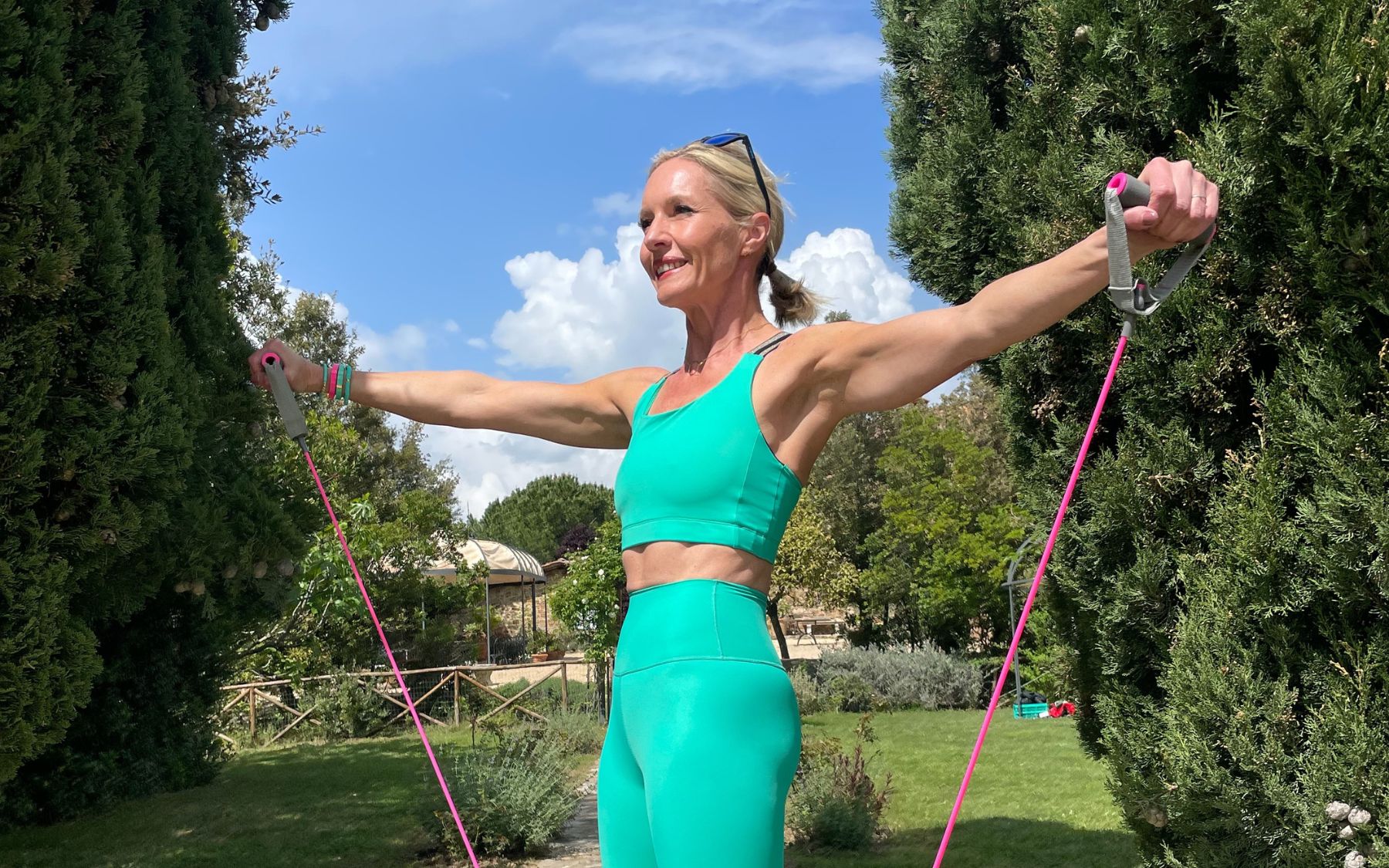
  5. Lateral raise – slight bend at the elbows, keep the chest and neck tall and long, core strong to stop the upper body swinging. Squeeze the glutes to support the lower back.
  6. Bicep curl – pin the elbow into the side and control the weights both up and down.
  7. Hammer curls – squeeze the tricep at the bottom, core strong and upper body still to avoid momentum in the movement.
  8. Straight leg or Romanian deadlift – keep the back straight and hinge from the hips, weight in the heels and glide the weight down the front of the legs. Only go down as far as the chest is parallel to the ground and don’t arch the back.

Try 10-15 reps of each exercise to get you started.

I have just launched a brand new beginner programme on the platform so if you’re ready to get started but not quite sure how, why not give it a go

As always, any questions please do get in touch.

Caroline x

The two most important things you need to know to build lean muscle

Building lean muscle or “getting toned” as it is sometimes termed is often a goal when it comes to exercise but the type of exercise and what you eat really does make a difference. Growing lean muscle tissue is determined by the rate of muscle protein synthesis which is regulated by strength training and your protein intake. 

Let’s break this down – muscle protein synthesis is the process by which muscles grow. Everyday muscle tissue is both created and broken down and the amount created must be greater than the amount broken down to see muscle growth. Muscles are made up of protein-based fibres and so increasing the number and size of those fibres increases the muscle mass. 

Muscle protein synthesis is driven by strength training and protein intake but most importantly this is not an either or situation – both are needed for muscle growth. So how to optimise this? 

Firstly prioritise and monitor your protein intake. Protein from our diet gives the body the building blocks it needs to make up the proteins in our bodies, including muscle. These building blocks are called amino acids and there are 20 of them in total. 11 of these can be produced by the body itself and 9 that must be taken in via our diet. So not only do you need to get enough protein in, it needs to be protein that contains these 9 essential amino acids. 

Animal source proteins such as meat, fish, poultry, eggs and dairy are termed complete proteins as they provide all 9 amino acids. Some plant sources such as quinoa, soy and buckwheat are also complete proteins but it’s important to double check other plant sources to ensure you’re getting all the amino acids you need.

In terms of the amount of protein you need…

The body actually needs more protein as you get older. As we age we become less efficient at handling and responding to protein so we need more of it to function optimally compared to when we are younger. It might not surprise you to find out that this increases further if you are a woman post menopause. The protein requirements officially change when we are over 65 however menopause has such a large hormone shift in a short period (resulting in body changes such as reduced muscle mass and increased body fat) that it might be wise to start upping your protein intake earlier than 65 as a woman. In addition combining that increase with a well-structured strength training plan can offset those menopause changes. 

The general protein recommendation for adults is to have 0.8 grams of protein per kg of body weight with more active women (especially those lifting weights) having 1-1.2 g per kg body weight which is 65-78 g of protein for a 65 kg woman. It has also been suggested that an additional 0.4 g per kg bodyweight in snacks throughout the day (an additional 26g of protein) for women in midlife and beyond is optimal. 

Finally on protein, timing is important as well. Protein should be a component of every meal and snack during the day but a high protein breakfast is very important to give the body a supply of amino acids to start the day and then again post workout to help you build lean muscle. 

Moving onto workouts… 

To build lean muscle you need to prioritise strength training. There are lots of benefits to cardio training such as heart health and blood pressure management but strength training is where it is at for so many additional benefits including bone health and building lean muscle. 

Strength training means using your muscles against a force – such as a dumbbell or band. The resistance creates damage in the muscles which then stimulates the repair and rebuild process to grow the muscle fibres back stronger. Remember you can just use bodyweight too.

Research has shown that 30-45 minutes three to four times a week is ideal to build lean muscle. Strength training three times a week gives your body enough time to recover between sessions whilst still being challenging enough to see the results. The key is to target different areas of the body on different days to allow time for the recovery.

If you’re new to fitness and training you may need to start more gently with very light weights and build up over time. I have long since been an advocate of strength training, particularly for women, and with this in mind I built my platform – Caroline’s Circuits. My workouts are 4 times a week for just 30 minutes. They are interval strength training circuits which work different muscle groups and challenge the body – they give the perfect mix of strength and cardio for the best results.

The online workouts are Monday, Tuesday, Wednesday and Friday (they are all recorded and available to you immediately after the session if you can’t make them live). Classes have been specifically designed to suit all fitness levels and create fitness habits which last & which produce results.

Any questions as always please do get in touch!

Caroline x

When will I start to see results? 

We might be in the depths of winter (here in the UK) but it really is only a short hop until summer so now is the perfect time to start training and maximise the next 6 months. If you speak to any marathon runners they all start training in November for Spring races so now is the time to get started! It’s not about summer bikini bodies – it’s about feeling our best both mentally as well as physically.

We all know that there will never be THE perfect time – there will always be things in the diary – work and family commitments that will get in the way – so now is as good a time as any! 

Obviously it depends on your base level of fitness and your nutrition, recovery etc but as a general rule of thumb you should start to notice some initial changes from your exercise routine (if you are exercising consistently 3x a week) within the first 4-6 weeks. In even as little as 2 weeks you may well feel better in yourself mentally for starting. If you are brand new to fitness you may see results faster than someone who has trained for years as their bodies will be more conditioned.

Top tips for results:

  1. Keep a journal & measure your progress – this doesn’t have to be before and after photos or numbers on scales – it can be how you feel after each workout and which sessions you enjoyed and why.
  2. Challenge yourself but keep it realistic – you need to keep the resistance on the muscles but make it a gradual increase
  3. Don’t forget how important nutrition is in your journey
  4. Starting to lose motivation? Phone a friend to exercise with you and ensure it’s something you enjoy as you are much more likely to stick with it.
  5. And finally and perhaps most importantly consistency. Read on!!!

When it comes to strength training and results, consistency is the most important factor. If you commit to your workouts each week you will feel and see results quicker. You will start to find those everyday tasks easier – maybe a walk will become a walk/jog/run and that first workout will feel that little bit easier than it did a few weeks ago. Make your goals realistic and achievable.

Unsure how to get started here is a workout for you to try! You don’t need any equipment, you can do this one anywhere with  just body weight (or you can add in weights if you would like to challenge yourself).

Try 3 rounds of this full body circuit. If you’re new to strength training try 30 seconds on 30 seconds off x 3 rounds with 30 seconds rest between circuits. If you’re intermediate or more advanced try pushing for 40 seconds on 20 seconds off x 4-5 rounds. 

  1. Squat and press – keep it slow and controlled, weight in the heels, core switched on
  2. Deadlift into upright row – keep the back straight, no hunching, use the glutes on the way up and keep that core strong
  3. Reverse lunge and curl – weight in the front heel, chest stays tall, no forward lean
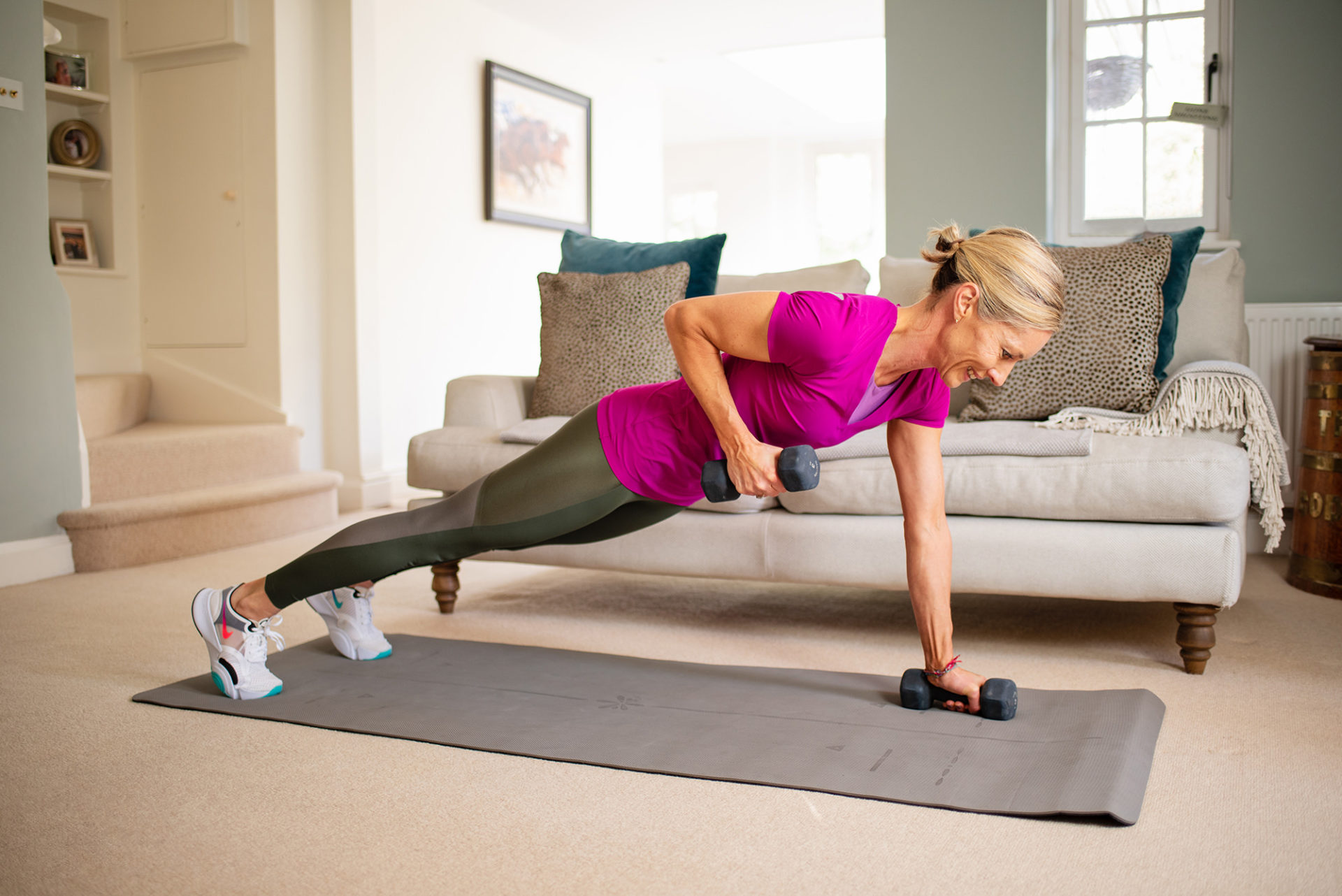
  4. Renegade row & press up – you can do this one on your knees or toes (beginners go for your knees) aim to keep the hips still
  5. Cross body climbers – again you can do these on knees or toes and the key is control
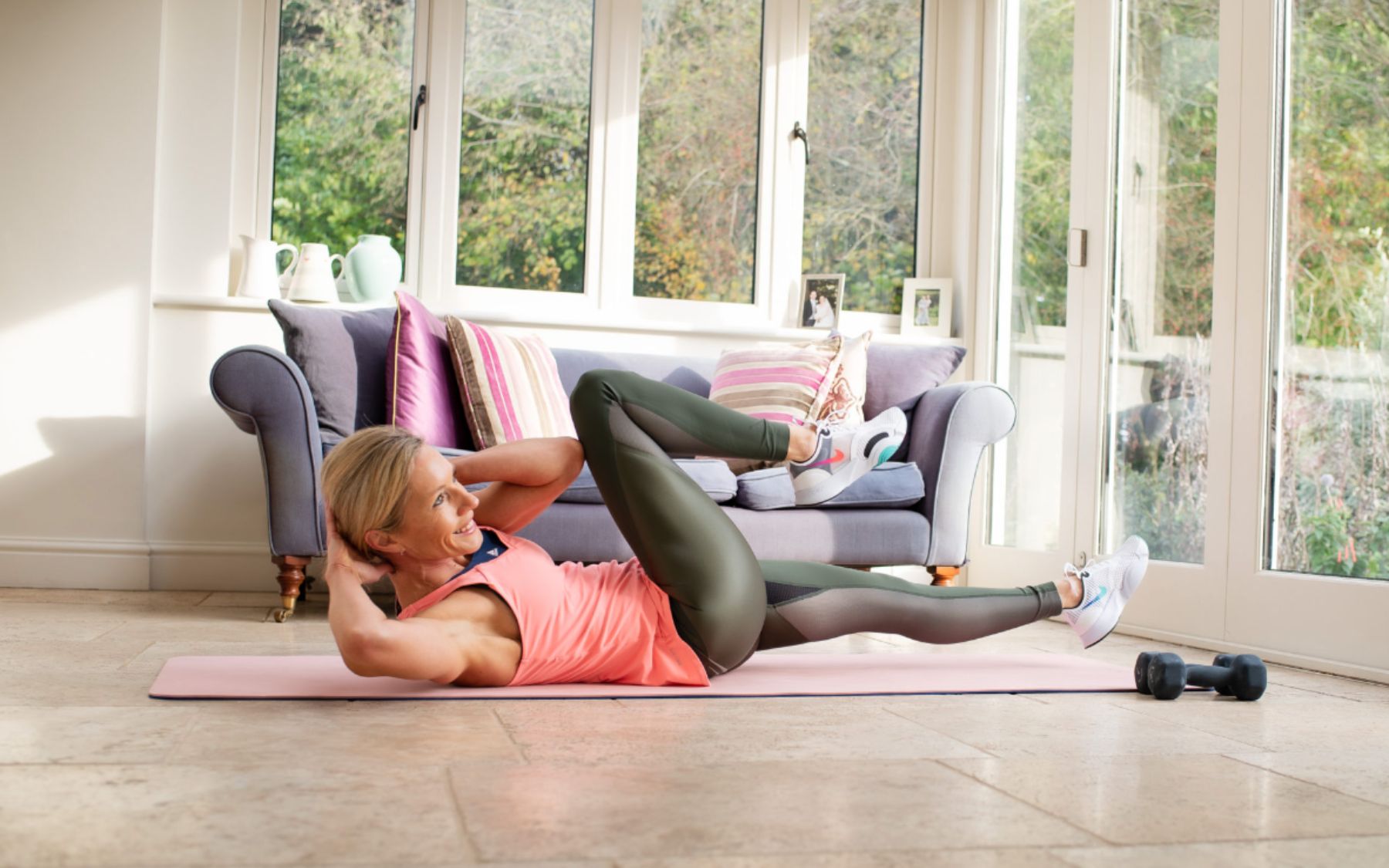
  6. Russian twist – with or without a weight both are great for your core

You can see the workout here if you would like to take a look at the exercises. 

Are you looking for a new fitness platform to get stuck into? Try a class for free here

I have long since been an advocate of strength training, particularly for women, and with this in mind I built my platform – Caroline’s Circuits. My workouts are 4 times a week for just 30 minutes. They are interval strength training circuits which work different muscle groups and challenge the body – they give the perfect mix of strength and cardio for the best results. There are also shorter 10/15 minute sessions if you are building up slowly and new beginners classes.

The online workouts are Monday, Tuesday, Wednesday and Friday (they are all recorded and available to you immediately if you can’t make them live). Classes have been specifically designed to suit all fitness levels and create fitness habits which last & which produce results.

If you have any questions please do get in touch.

For more workout inspo and to find out a bit more about me check out my Instagram.

Caroline x