Better Posture Starts with Strength!
Posture is something we don’t always give much thought to until we start noticing a little stiffness in our shoulders, an aching back or that we’re not standing as tall as we used to. Whilst it’s easy to blame our phones, computers and sedentary lifestyles, there’s another really important factor that we often overlook – our muscle strength. As we get older, maintaining strong muscles becomes even more important, not just for how we look, but for how we move, feel and function every day. There is plenty we can do for ourselves to help and you won’t be surprised to hear that strength training is one of my favourite ways to fix it.
What Happens When We Neglect Our Posture?
There isn’t one single ‘perfect’ posture that we should be trying to hold all day. Our bodies are designed to move and even a position that looks perfectly upright can become uncomfortable if we stay in it for too long. The issue is often a combination of prolonged sitting, limited movement, reduced mobility and muscles that aren’t being challenged enough.
Over time, this can contribute to:
- Stiffness through the chest and shoulders. Spending long periods with our arms in front of us can leave the muscles around our chest and shoulders feeling tight, particularly if we’re not moving through a full range of motion regularly.
- Neck and upper back discomfort. Holding our head and shoulders in the same position for extended periods can increase muscular fatigue and contribute to tension.
- Reduced mobility. When we stop regularly moving our joints through their available range, certain movements can start to feel more restricted.
- Changes in balance and stability. Reduced strength, particularly through our core, hips and legs, can affect how confidently we control our bodies during everyday activities.
- Less efficient movement. When we lack strength or mobility in one area, we may compensate elsewhere, making some movements feel more difficult than they need to.
Poor posture doesn’t automatically cause pain and everyone has slightly different natural postures. But neglecting our strength and movement habits can certainly contribute to stiffness, fatigue and reduced physical function over time. This is why I think it’s so important to look beyond simply reminding ourselves to sit up straight. We need to strengthen the muscles that support us, keep our joints moving and become more aware of how we’re holding ourselves throughout the day.
Why Strength Training Makes Such a Difference
When we think about improving our posture, the first thing that usually comes to mind is pulling our shoulders back and sitting up straight – I remember being told this as a child and throughout my teens (I’m sure I repeat this to my kids, too!).
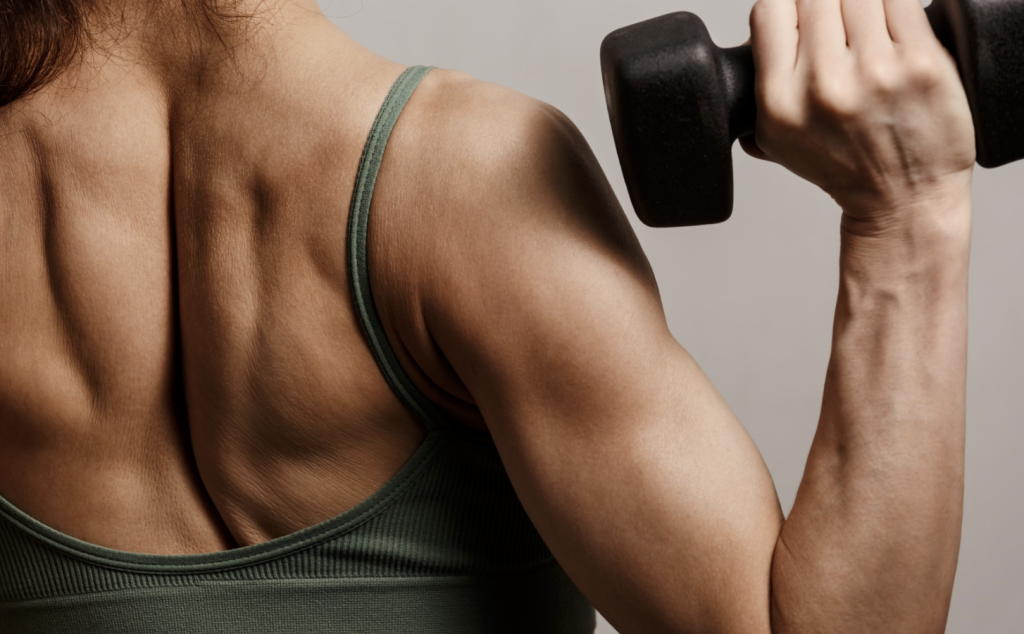
Our posture is supported by a whole network of muscles, particularly those in our upper back, shoulders and core. These muscles work together to help us stand upright, maintain our balance and move comfortably. Our spine has natural curves that help distribute forces through the body, whilst the muscles surrounding it provide support and allow us to adjust our position as we move. When certain muscles become weaker or less conditioned, other muscles may have to work harder to compensate. For example, if the muscles around our upper back and shoulder blades lack strength and endurance, it can become more difficult to maintain a comfortable upright position for long periods. Interestingly, the position of our head makes a difference too. Our head is relatively heavy (weighing around 4–5kg in most adults). When it moves forward from our shoulders, the muscles at the back of our neck have to work harder to support it. This contributes to muscular fatigue and discomfort, particularly if we’re spending hours looking down at screens.
When the muscles supporting our body become weaker, maintaining certain positions and keeping our balance can start to feel more difficult. However, as we know, we can continue to build strength, improve our mobility and support our bodies well into later stages of life.
Anyone who has followed Caroline’s Circuits for a while will know just how passionate I am about strength training, especially for women in midlife. Posture is another brilliant reason to keep lifting those weights. Strengthening the muscles around our upper back and shoulders helps us maintain control of our shoulder blades and upper body. A strong core supports our spine and helps us stay stable as we move, whilst strong legs and glutes contribute to stability, balance and the way we stand and walk. It’s all connected! Resistance training also helps us maintain muscle mass and supports bone health, something particularly important for women during menopause.
A few simple exercises, performed regularly and with good technique, can make a real difference to your strength and how comfortably you move.
My 5 Favourite Exercises for Better Posture
These are five exercises I love incorporating into my workouts. They’re particularly good for strengthening the upper body and core and you can adapt them to suit your own fitness level.
If you’re just starting out, try 10 repetitions of each exercise, building towards three sets as you become stronger. You could incorporate them into your workouts three times a week, allowing time for recovery.
Start with bodyweight or light dumbbells where appropriate, and remember, it’s always about good technique rather than how heavy you can lift!
1. Bent-Over Row
This is such a brilliant exercise for strengthening the back, and one I regularly include in my circuits. It works the muscles across your upper and middle back, helping you build the strength needed for everyday pulling and lifting movements.
2. Prone T Raise
You really don’t need weights to start with this one. Focus on making each repetition slow and controlled. This targets the smaller muscles around your shoulder blades, an area we don’t always think about but one that’s so important for shoulder strength and control.
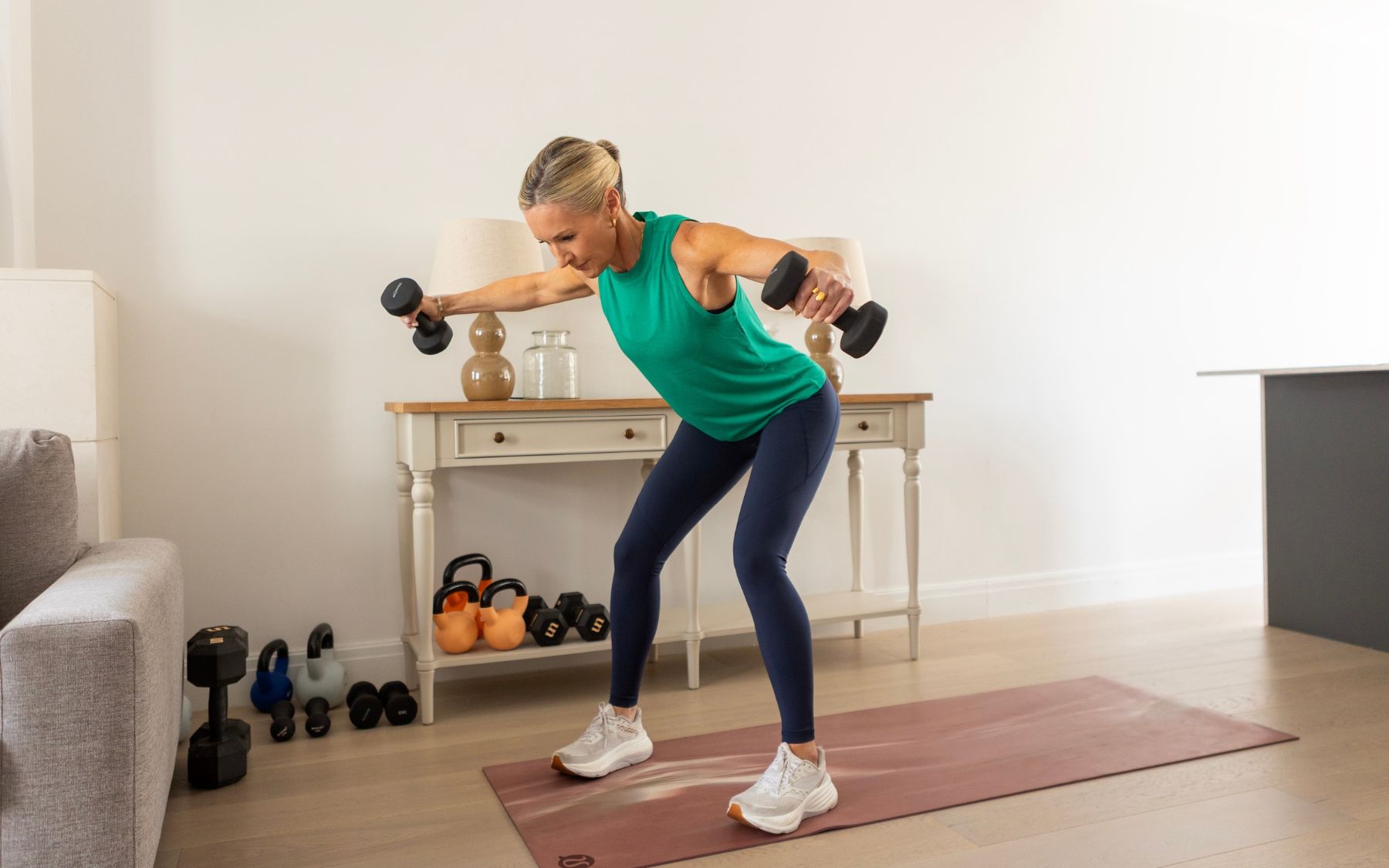
3. Reverse Fly
Another favourite of mine for the upper back and shoulders! It’s excellent for strengthening the backs of our shoulders and the muscles that support our upper body, particularly important when so much of our day involves reaching forwards.
4. Single-Arm Row
I love including exercises that work one side of the body at a time, as they really help us focus on control. Not only does it strengthen your back, but your core also has to work to keep your body steady and resist unnecessary twisting. This is known as anti-rotation, and it’s an important part of how our core supports the spine during everyday activities. A great combination!
5. Weighted Dead Bug
A strong core is so important for stability, balance and supporting our spine, and dead bugs are one of my favourite exercises for building that strength. This exercise builds core control whilst your arms and legs are moving – something we rely on constantly in everyday life.
Little Changes Throughout the Day Really Do Add Up
If you’re spending much of your day sitting at a desk or looking at a screen, running around after the kids or grandchildren, try to build a little more movement into your routine. It doesn’t have to be complicated! Get up and walk around regularly, roll your shoulders, stretch your arms overhead or take a few minutes away from your desk. If you’ve been sitting for a while, stand up, gently open your chest and take a moment to notice where your shoulders, head and hips are positioned.
You might also find it helpful to think about standing tall through the crown of your head, keeping your shoulders relaxed rather than tense and gently engaging your core without holding your breath or bracing rigidly… And don’t forget your daily walks. Walking is such a brilliant way to keep moving, get some fresh air and break up those long periods of sitting.
Research suggests that regularly interrupting prolonged sitting with movement can benefit our metabolic health, whilst strength training helps preserve the muscle function we need for everyday life (see physical activity guidelines from the NHS here). Think less about forcing yourself into the ‘correct’ position and more about building a strong, mobile body that feels comfortable moving in lots of different ways.
My November Posture Series
With all of this in mind, I’ve included a dedicated five-class Posture Series in my November workouts, focusing on building strength, improving mobility and becoming more aware of our alignment all available on Caroline’s Circuits.
Across the five classes, we work on opening up the chest, strengthening the back, encouraging the shoulders to move back and down comfortably, creating length through the neck and developing better core control. We also focus on how we’re standing and moving. As I’ve mentioned in this blog, posture isn’t just about our upper body – it involves the whole body working together.
The series includes a mixture of weights and resistance bands, along with a seated class, so there are different ways to work on these important muscles.
Each workout follows two sets, performing each exercise twice, there is also a popular no repeats class which I know you all love. The idea is to build strength and control through a variety of movements, rather than simply holding ourselves in a certain position. It’s a great reminder that improving posture isn’t about forcing our shoulders back all day. It’s about strengthening the muscles that help support us naturally, improving our mobility and feeling stronger and more comfortable in our bodies.
A Final Thought
One of the things I love most about what I do is seeing how much stronger and more confident people become when they start exercising regularly. It really doesn’t matter whether you’re in your 30s or 60s – we can continue to improve our strength at any age and those benefits go far beyond the workout itself. Good posture isn’t just about standing taller or pulling our shoulders back. It’s about having the strength to support our bodies, the mobility to move freely and the awareness to recognise when we’ve been sitting or standing in one position for too long. Rather than constantly telling yourself to sit up straight, why not focus on getting stronger instead?
As always, any questions please do get in touch.
Caroline x